Can the UK feed itself in the face of ecosystem collapse? Our Head of Policy & Campaigns, Megan Perry, takes a closer look at the UK Government’s recently published security report – following a Freedom of Information Request by the Green Alliance – highlighting how the government’s ‘just in time’ approach to food supply jeopardises the UK’s food security, and the transformation in food and farming production that is needed to address this.
A new report has given one of the starkest warnings yet for UK food security. If current rates of biodiversity loss continue, every critical ecosystem is on a pathway to collapse. This will mean the UK cannot feed itself.
These warnings were so stark, in fact, the UK Government attempted to bury its own report. ‘Global Biodiversity Loss, Ecosystem Collapse and National Security’ was written by the joint intelligence committee (which comprises the heads of MI5, MI6 and GCHQ and senior officials from the Cabinet Office, Foreign and Commonwealth Office, Ministry of Defence, Home Office and HM Treasury) and was initially blocked by Downing Street. It only came out following a Freedom of Information Request by the Green Alliance.
Why was it blocked? According to The Times, Downing Street felt the report was too negative and would draw attention to the Government’s failure to act. The published document is reported to have been cut down, with some of the most alarming parts left out.
As the Government tries to keep us in the dark, it is even more important we sit up and take notice. The report warns that, “Without significant increases in UK food system and supply chain resilience, it is unlikely the UK would be able to maintain food security if ecosystem collapse drives geopolitical competition for food. The UK relies on imports for a proportion of both food and fertiliser and cannot currently produce enough food to feed its population based on current diets.”
Across the world, ecosystems are collapsing. According to the report, the rate of extinction is tens to hundreds of times higher than the average over the past 10 million years. It suggests that a sixth mass extinction may be underway. There is a realistic possibility some critical ecosystems, such as coral reefs in Southeast Asia and boreal forests will start to collapse by 2030 or sooner, and rainforests and mangroves from 2050. This is a direct result of biodiversity loss from land use change, pollution, climate change and other drivers.
As the report clearly states, “nature is a foundation of national security”. Biodiversity loss and ecosystem collapse threaten the fundamental existence of human life – access to water, food, clean air and critical resources.
As these become scarce, the report warns there will be conflict within and between states along with mass migration and increased risk of pandemics. According to the report, a one percentage increase in food insecurity in a population compels 1.9 percent more people to migrate. Political instability and rising poverty will provide more opportunities for terrorism and organised crime. Global economic collapse will become more likely. As the report says, “Nature is a finite asset which underpins the global economy. It would take resources of 1.6 Earths to sustain the world’s current levels of consumption.”
The report is upfront about how this impacts UK food security. Biodiversity loss, alongside climate change, is one of the biggest threats to domestic food production – through depleted soils, the loss of pollinators, and drought and flood conditions.
It details how ecosystem collapse would place the UK’s agriculture system under great stress, leaving it struggling to pivot to the new approaches and technologies that would be required to maintain food supply. Impacts on major food producing regions around the world will have a direct impact on the UK which relies on global markets for food (40% is imported), animal feed (18% comes from South American soy) and fertiliser.
But food is not just affected by biodiversity loss, it is a direct contributor, with food production named as the most significant cause of terrestrial biodiversity loss.
A shift to sustainable farming systems has therefore never been more critical, playing a key role in reversing ecosystem collapse and mitigating food insecurity. Carrying on as we are and pursuing extractive agricultural practices is not an option. Yet the UK Government seems determined to ignore the immense and imminent risks.
“As the report clearly states, “nature is a foundation of national security”. Biodiversity loss and ecosystem collapse threaten the fundamental existence of human life – access to water, food, clean air and critical resources.”
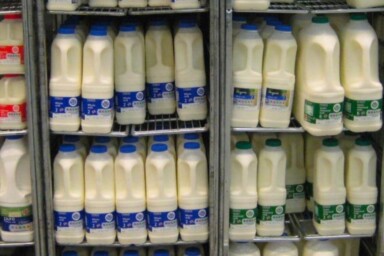
It is notable that the UK has so far failed to change its approach to supply chain resilience and security, unlike countries such as Sweden, Finland, Norway and Germany who are building up their food stocks and reserves. The UK, meanwhile, continues to rely on a ‘just in time’ approach to food supply, requiring consistent and rapid delivery to keep shelves stocked. Any disruption to this supply chain could have an enormous impact on the availability of food in the UK.
Global threats are looming, and while the UK now reports separately on food security, it lacks any coherent action plan and fails to integrate food with wider security strategy. The UK Risk Register – which flags up the main threats to the UK and covers everything from terrorism to disease outbreak – fails to make food and water a clearly defined risk in its own right. The UK National Security Strategy published last year gave a passing mention of food four times and without any detail about how the UK plans to address threats to food supply. The 2022 Government Resilience Framework said nothing at all about food.
What can be done?
Protecting and restoring ecosystems is clearly a priority. But our current trajectory does not look good, and plans need to be put in place now to deal with the potential impacts.
We agree with many of the report’s conclusions, including that self-sufficiency requires a wholesale change in consumer diets and improvements in efficiency, waste reduction and resilience across the food system, including agricultural production, food processing, distribution and consumption. These echo the conclusions of the Sustainable Food Trust’s Feeding Britain report which showed the UK can transition to fully regenerative farming practices and maintain or improve current levels of self-sufficiency, but that dietary change would be needed.
We welcome the mention of regenerative agriculture as a solution and feel there is a wider point to be made – climate change and geopolitical shocks change the equation around agroecological vs ‘conventional’ food systems and their (perceived) practicality. Arguments that agroecology is unfeasible due to its lower yields and a requirement for very difficult dietary change, are somewhat overshadowed by the reality that a food system with heavy use of imports, fossil fuels and agrichemical inputs could become unviable in the face of ecosystem collapse and geopolitical turmoil. Not to mention that these intensive input-heavy systems are the biggest contributors to ecosystem collapse. There is no choice but to seriously consider agroecology as the main alternative.
We therefore caution against placing too much emphasis on new technology to provide the answers (plant-breeding, AI, lab grown protein and insect protein are all mentioned). That’s not to say that technology has no role to play – far from it. But systemic change, from farm to fork, is what is ultimately required.
Any shortages in food will inevitably impact hardest on those who are already facing food poverty. The report says substantial price increases for consumers would be required for self-sufficiency. Yet prices now do not reflect the real cost of production, with the most damaging foods often being the ‘cheapest’ yet costing far more in environmental damage and impacts on our health. A transformation of our food system is needed to right these skewed economics and government intervention must be a core part of that.
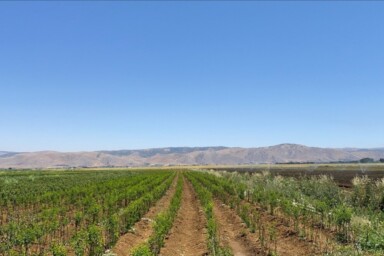
The report also says the UK does not have enough land to feed its population and rear livestock. We agree that a complete shift is needed away from grain-fed livestock, particularly intensively produced poultry and pork. But integrating pasture-fed livestock, such as cattle and sheep, into regenerative systems is critical to rebuild soil fertility and move away from our reliance on fossil fuel- and energy-intensive fertilisers and pesticides.
Grazing livestock produce nutrient-dense foods that complement, rather than compete with, the crops produced from our finite and increasingly degraded arable area. In fact, in a regeneratively farmed UK, predominantly grass-fed animals could supply a significant proportion of the nation’s nutrient requirements – including around 34% of recommended protein intake, 37% of fat intake and 98% of vitamin B12 intake.
“We caution against placing too much emphasis on new technology to provide the answers (plant-breeding, AI, lab grown protein and insect protein are all mentioned). That’s not to say that technology has no role to play – far from it. But systemic change, from farm to fork, is what is ultimately required.”
Livestock also provide a level of resilience to environmental shocks that crops do not – they can be moved and, in worst cases slaughtered, should resources such as water become scarce or fields flooded.
So, a major transformation in livestock production is needed, as is the case for crop production. And this will require many people to eat less meat and dairy, overall. It’s critical, though, that this transformation doesn’t overlook the massively positive role that livestock can play in fostering a more resilient, environmentally and socially sustainable food system.
The report says countries best placed to adapt are those that invest in ecosystem protection and restoration, and resilient and efficient food systems. Yet support for sustainable food production has been inadequate and shambolic, with record closures of farming businesses. The UK also appears to have given up on the 30×30 target (30% of our land and sea protected for biodiversity by 2030) and is on track to miss targets established in the 2021 Environment Act for protecting and restoring wildlife.
While we must pressure Government to act with urgency, communities can also take things into their own hands. Tim Lang’s excellent report on civil food resilience highlights the different ways people can build resilience themselves, whether by growing food in allotments, gardens and community farms, forming co-operatives, building community food stocks, or by sharing skills.
Ultimately a major mindset shift is needed to address the root causes of ecosystem destruction and to embrace an integrated approach to food production and nature restoration. There is no time to lose.
Featured image courtesy of Christian Kay.