At a time when governments are once again backing productivity, technology and intensification, are we overlooking the fact that intensive farming systems may be becoming less resilient, not more? The SFT’s Senior Research Manager, Robert Barbour, considers the question in light of the UK’s increasing number of mega dairies.
What kind of food system are we building?
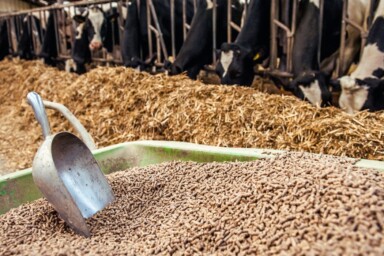
That question has been brought into sharp focus by two recent developments in the British dairy sector. First came an investigation by Andrew Wasley for The Bureau of Investigative Journalism, revealing that the number of so-called ‘mega dairies’ – where hundreds or even thousands of cows are kept permanently indoors – has doubled over the past decade. Then came the news that the number of dairy farms in Great Britain has fallen below 7,000 for the first time, less than half the number operating in the early 2000s.
Taken together, these stories tell a familiar tale. Faced with years of low milk prices and rising input costs, many dairy farmers have been pushed into a corner: either leave the industry or invest heavily to increase production. The result has been fewer farms, larger herds and a growing reliance on intensive systems that depend on imported feed, synthetic fertilisers and high levels of production to remain viable.
For some, this is simply the inevitable modernisation of agriculture. For others, including Sustainable Food Trust CEO and dairy farmer Patrick Holden, it points to a deeper problem. As we argued in our Grazing Livestock report, the long-term future of livestock farming should not be judged solely by how much it produces, but by whether it works within the ecological limits of the land while supporting food security, farmer livelihoods, animal welfare and environmental health.
Until recently, the argument for more agroecological forms of livestock farming was often dismissed as unrealistic. The assumption was that lower-input systems could not deliver the volumes needed to feed the population. But as climate change intensifies and global supply chains become more fragile, that assumption deserves much closer scrutiny.
The blockade of the Straits of Hormuz – through which a third of the world’s nitrogen fertiliser is transported – and extreme weather events like the June heatwave in Europe, show why transitioning to low input, pasture-based systems is more critical to food security than ever before. In part, this is because such systems have a much lower reliance on fossil fuel-intensive imports of energy, feed and fertiliser: animals can ‘upcycle’ human inedible plants into nutrient-dense foods and soil quality can be improved without synthetic fertilisers, for example with the dung of grazing animals and nitrogen-fixing plants like clover. The recent news that the Straits has, to some extent, reopened, must not serve as cause for complacency in the drive to transition to more resilient farming practices. Ongoing geopolitical instability means it is unlikely to be the last such instance, with sobering warnings that Europe’s food system is likely entering an era of permanent stress.
Climate change and environmental degradation are, of course, a massive driver of this stress. A significant proportion of our agrifood imports come from countries that are highly vulnerable to climate change, with a Government security assessment, published earlier this year, concluding that the UK would probably be unable “to maintain food security if ecosystem collapse drives geopolitical competition for food”. But environmental and climate breakdown also pose major challenges for domestic production. In their most recent report, the Climate Change Committee predicted that, without adaptation, the amount of ‘high-quality farmland’ in England and Wales could shrink from 38% to 11% by 2050 under a 2°C warming scenario. Soil erosion is expected to increase by at least 15%, and arable crops will become increasingly threatened by drought, with the worst year in 20 causing 20% yield loss in wheat in the South East of England. Extreme weather is already negatively impacting yields, with England having experienced three of the worst five harvests on record over the past decade driving the five-year harvest average below the 20-year average – an unprecedented reversal.
In short, there are serious questions around whether we will be able to keep on producing food and feed in the same high input, high output manner as we do today. It feels even more difficult to argue that we will be able to use as much arable land to feed livestock – an inefficient use of a finite and increasingly pressurised resource, that will only get worse if livestock production continues to intensify.
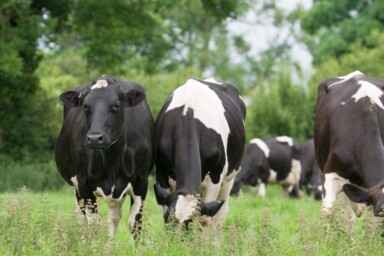
Livestock production centred on grazing, on the other hand, could make a central contribution to a more efficient and resilient UK food system by converting grass and other inedible feeds into nutrient dense meat and milk. The total quantities produced would be lower than today; our Feeding Britain report, for instance, modelled a 20% reduction in dairy production alongside steep falls in pork and poultry, due, mainly, to the much lower quantities of arable crops available for feed.
This means that transitioning to an agroecological farming system will go hand-in-hand with changes to our diets, but smaller amounts of high-quality meat and dairy would still represent a significant source of various key nutrients, and one that, crucially, would complement, rather than compete with, the food we get from croplands. This, in turn, could create more space for systems of crop production that may be lower yielding, but which, through greater diversity and better soil health, are more resilient to extreme weather. Research from Wageningen University, for instance, has shown that a global food system where livestock are fed entirely on human-inedible feeds would only require 75% of the arable land needed for a vegan diet, because of the additional supply of calories and nutrients made available through meat and dairy.
Add this to the major environmental issues associated with intensive livestock production, and we have a clear imperative for a shift to farming animals in a less resource-intensive way – and adapting our diets accordingly. Doing so, will bolster food security and support us to be healthier, all while using millions of hectares of UK grassland otherwise largely unsuited for food production. Realising this vision isn’t easy. As tempting as it is to think that the recent surge in input costs might precipitate such a shift, this seems unlikely, so it cannot be left to the market alone – Government needs to up its game, in all sorts of ways. We also need to broaden our understanding of sustainability and efficiency, from a narrow focus on product-level footprints (which tend to favour intensive systems), to a more aggregated, system-wide measurement of impact – which is, of course, the scale which ultimately matters.
The rise of ‘Big Dairy’ in the UK is certainly an issue that needs focus right now – it is a situation that should make us question whether bigger and more intensive necessarily means better. Yet, ultimately, this is about much more than dairy farming. It is about deciding what kind of food system we want, and what we mean by efficiency, sustainability and food security. If we continue to judge success primarily by output, we risk accelerating the loss of farmers, wildlife and resilience at precisely the moment we need them most.
Read about our London Climate Week session on Big Dairy here.