In Cyprus, the Kot-Kot project shows how animals, food waste and farming can be reconnected to restore soils and reduce reliance on chemicals. But as writer and researcher David McKenzie explores, the challenges it faces highlight a broader dilemma: will food systems reward regenerative, mixed models like this – or continue to favour industrial approaches that externalise their costs?
There is no single solution to building sustainable food futures. Nor is there a silver bullet for establishing resilient food systems that can best respond to the unpredictable impacts and challenges of climate change. It will take a concerted effort, with myriad approaches and solutions working together.
Still, some solutions have more of a ‘feel-good’ factor than others. And this might be one of them.
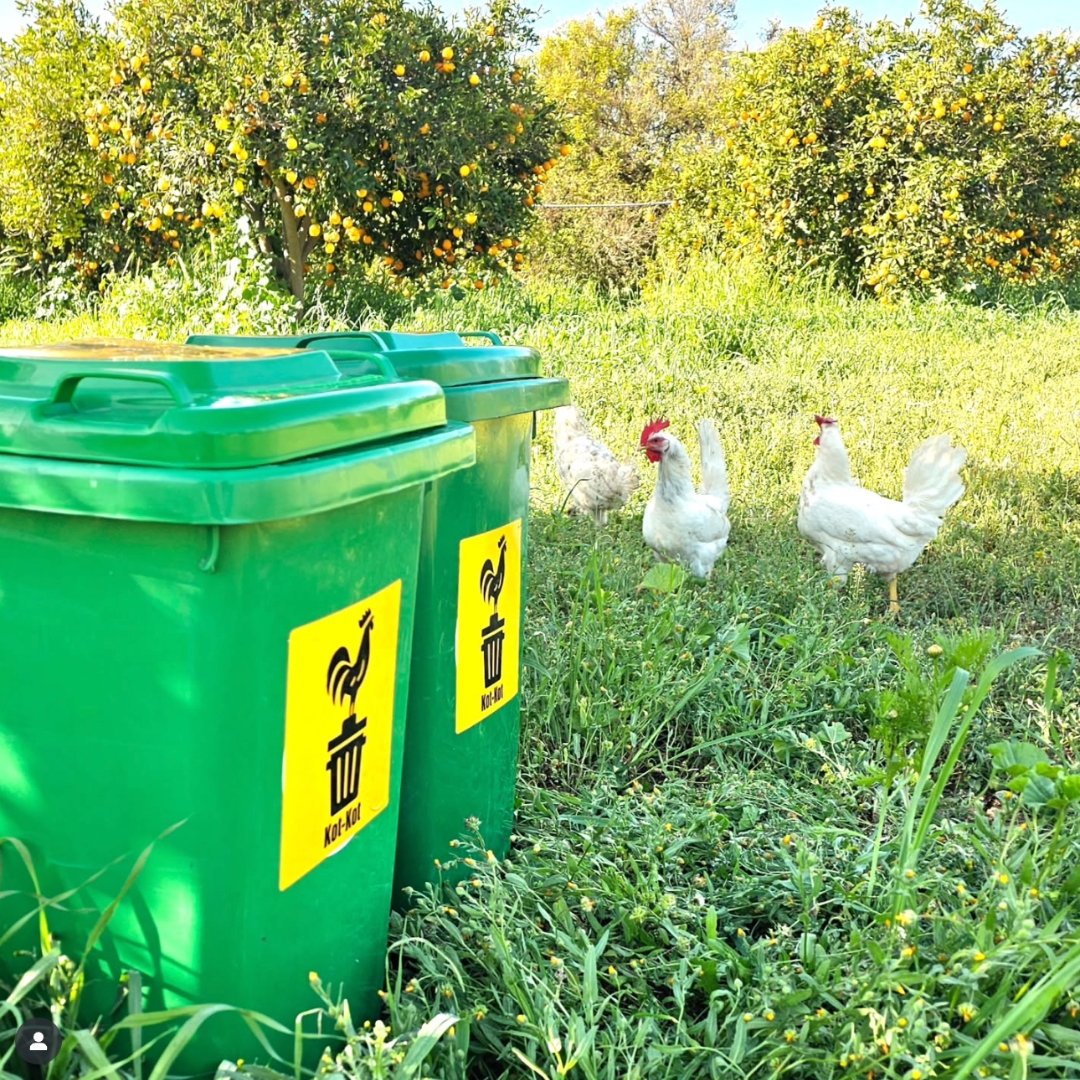
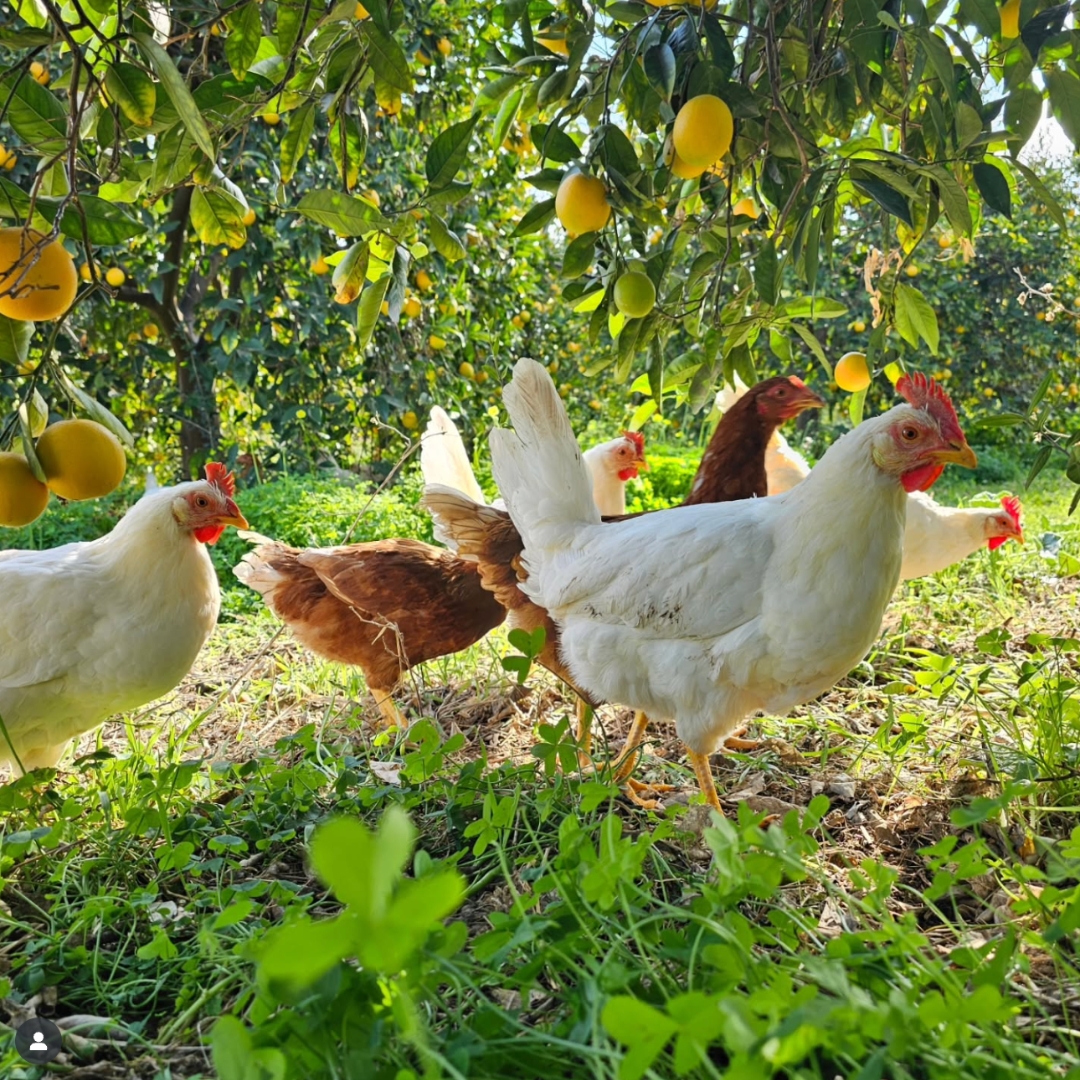
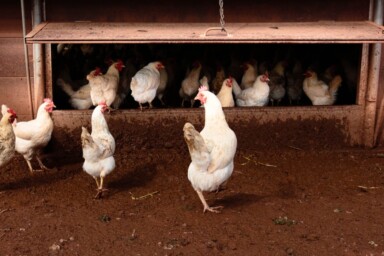
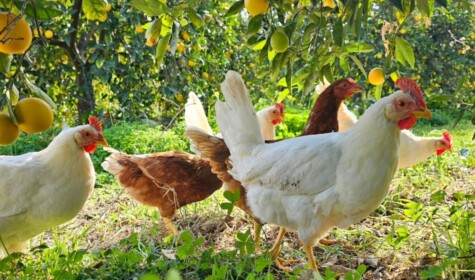
An olive grove in Cyprus has been taking an innovative (yet incredibly simple) approach to enhancing the organic matter of their soil, while also helping combat the island’s serious food waste problem and providing a means of reducing chemical fertiliser and pesticide use. It’s doing this by taking retired hens from the egg industry and having them roam free on the grove, fed by unwanted food-waste collected from local schools, restaurants, hotels and businesses.
The project, called Kot-Kot, has been running since early 2024 at Akaki Grove, 30 kilometers west of the capital Nicosia. It was instigated by farmer Elena Christoforos, who inherited the semi-abandoned olive grove from her grandfather, and Nicolas Netien, an environmental engineer and soil biologist who Christoforos brought on board in 2021 to help revive the olive and citrus trees.
“My focus is always on growing soil,” says Netien, who has been designing agro-ecological systems in line with a permaculture framework for 20 years. “I grow soil and let the trees grow themselves.”
Within that framework, Netien looks for any and every technique to increase organic matter in the soil, he says, focusing on maintaining a healthy microbiome for the trees’ root systems. In line with this, a diverse ground cover of plants was first established at Akaki Grove to enrich and protect the soil. But Netien wanted to “speed up” these natural processes and carbon cycles by having animals grazing the ground cover.
Christoforos agreed, but as a vegan, she has a zero-kill policy at the grove, instead favouring the maintenance of balanced, diverse ecosystems in which pests kill each other. She insisted that they could only do it if the animals were not to be killed or used for egg, meat or milk production.
That’s where the “happy hens” come in. Animals are expensive to keep and to feed, and if they weren’t going to have them for meat, egg or dairy production then it made sense, as Netien puts it, to find animals that nobody wants. Chickens, in particular, are “great workers” for the olive trees, since they not only clear the ground cover and unwanted weeds, reverting nutrients back into the soil via their fertile droppings but also provide excellent pest control by pecking at the larvae of insects like the infamous olive fly, traditional adversary of Mediterranean olive growers.
And so, with the help of free-range egg farmer and olive grower Nicholas Schizas, Kot-Kot managed to adopt a few hundred two-year-old hens coming out of the egg industry, who have finished their productive laying years and otherwise would’ve been slaughtered (yet still with plenty of ‘retirement’ years ahead, having a life expectancy of eight years or more).
From there, the next issue was sourcing food for the hens. Again, without any income that would usually come from egg or meat production, this needed to be cheap (if not free).
Coincidentally, however, Cyprus has a terrible food waste problem.
Cyprus generates by far the most food waste per capita of any country in Europe at around 300 kg per year, more than double the EU average of 132 kg/inhabitant. To make matters worse, the island nation’s waste management system has been mired in scandal and mismanagement for years, leading to hefty fines from the EU for continuously failing to meet waste management targets and failing to establish adequate facilities for processing mixed municipal waste (including organic waste), despite heavy EU funding specifically for such projects since at least 2015.