MAHA vs MAGA: What happened to Make America Healthy Again?

  • 06.10.2026
  • article
  • Agrichemicals
  • Policy
  • Honor May Eldridge

A new era for US health? The Trump administration promised better food, better farming and better health. So where has the administration got on delivering that promise and what’s it got to do with MAGA? Halfway through President Trump’s term, author Honor May Eldridge takes stock.

Few people would have expected pesticides to hit the headlines during a US presidential election. Yet, during the 2024 campaign, herbicides, ultra-processed foods and environmental toxins moved from the fringes of public debate to the centre of American politics. As part of his independent bid for the presidency, Robert F. Kennedy Jr launched Make America Healthy Again (MAHA), a deliberate echoing of President Trump’s Make America Great Again (MAGA) – a move that firmly pushed American health and diet onto the stage during the world’s biggest political race. MAHA announced both to the nation and the world that America’s diet (and associated cardiovascular crisis) couldn’t be improved without taking a long hard look at the food system that underpinned it. The link between ultra-processed foods, agricultural chemicals and non-communicable diseases was suddenly very much in the spotlight. When Kennedy suspended his campaign and endorsed Donald Trump in August 2024, many of those ideas (and voters) were transported over to the President’s campaign. Almost overnight, concerns about pesticides, herbicides and the way food is produced became part of mainstream political debate. Many hoped that when Kennedy joined President Trump’s cabinet that he would bring attention and, perhaps more importantly, action to the issue. But governing is frequently more complicated than campaigning and ‘single-issues’, however compelling, and it often gets mired in the complexity of administration.

And then we add to this MAGA. Alongside MAHA, sat another powerful political narrative: that America needs to reduce dependence on imports and strengthen its national resilience. Thus, over the last two years, high-output industrial agriculture – heavily reliant on agrichemicals – has increasingly been presented as a matter of national security. The result? A series of decisions by the Administration that have worked steadily against the vision of farming that the MAHA movement once advocated for.
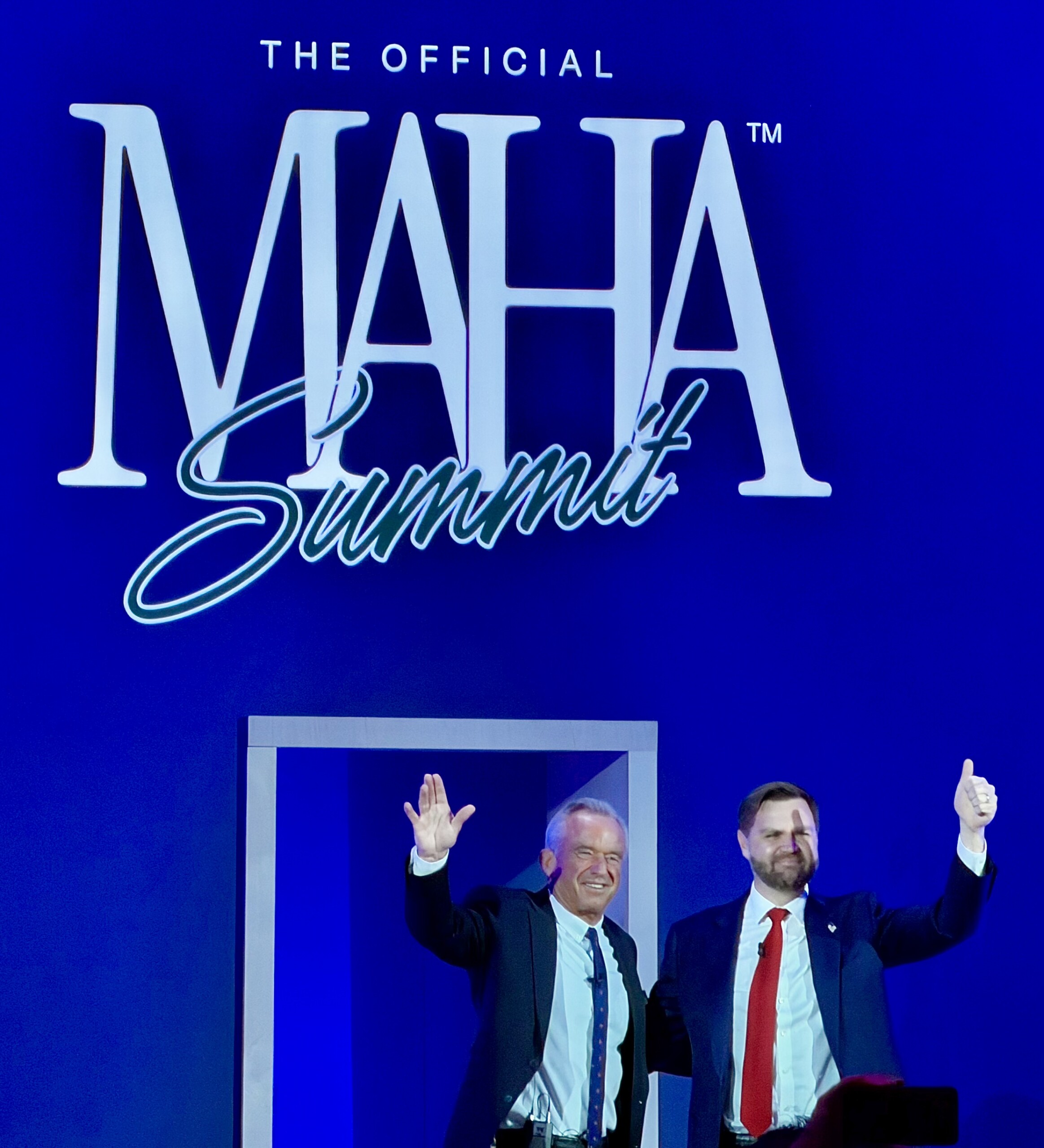
RFK Jr and JD Vance at the MAHA Summit
US Secretary of Health and Human Services, Robert F. Kennedy Jr. and Vice President JD Vance at the MAHA Summit (Photo by Steve Jurvetson)


The dicamba reversal

One of the clearest examples of this came with dicamba, a herbicide that targets broadleaf weeds. It is also used on GM crops since many have been modified to be dicamba-resistant. In 2024, a federal court effectively halted the widespread use of Dicamba based on evidence that the Environmental Protection Agency (EPA) had underestimated the herbicide’s risks. At the heart of the case was dicamba drift: unlike many herbicides, dicamba has a tendency not to stay where it’s sprayed. In fact, it’s rather prone to drift into neighbouring fields, damaging crops, wild plants and surrounding habitats. For farmers growing non-dicamba-tolerant crops, this has meant lost harvests, damaged relationships with neighbours and years of expensive legal disputes. The court’s decision to pause dicamba was welcomed by many. George Kimbrell from the Center for Food Safety said it was “a vital victory for farmers and the environment”.

Yet, less than two years later, the decision was reversed. In 2026, the EPA approved new registrations for dicamba-tolerant soybean and cotton crops, restoring its widespread use overnight. The agency argued that tighter safeguards, including lower application rates, larger buffer zones and temperature restrictions, had been put in place in response to the 2024 ruling, and that these actions would reduce the risk of drift to such an extent that it was safe for use. Critics remain unconvinced. Kimbrell responded to the decision by saying “the Trump administration has once again betrayed farmers and poisoned the environment to pad corporate pesticide profits”.

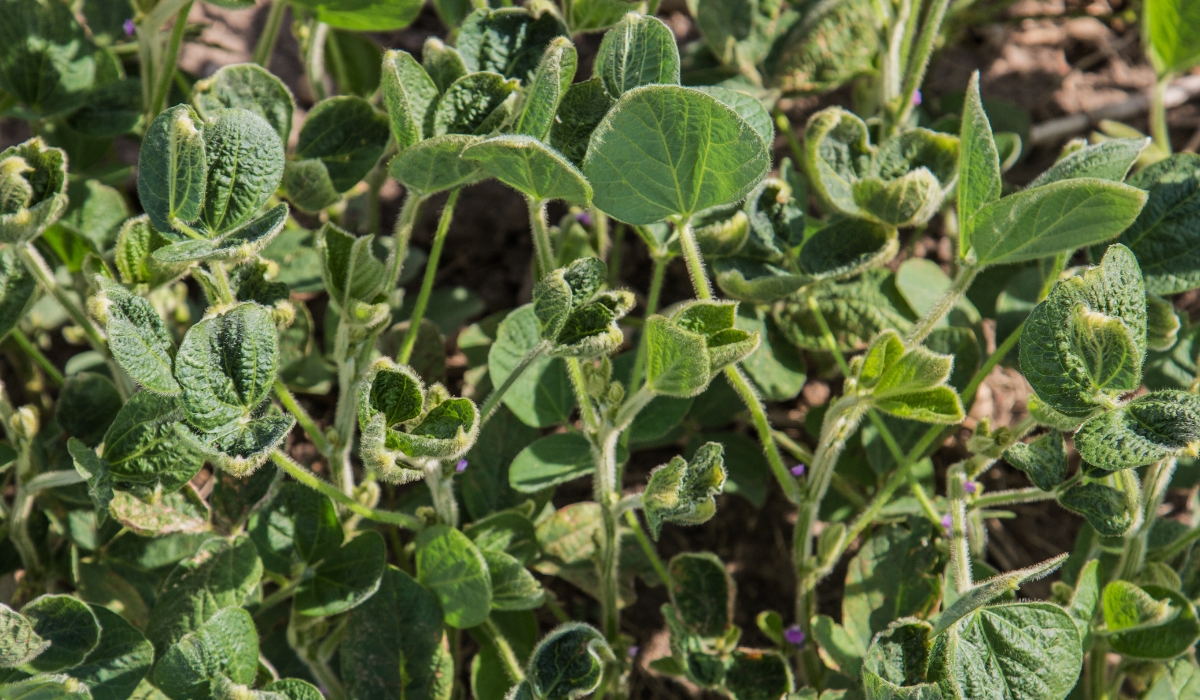
Soybeans damaged by dicamba herbicide (Getty Images)


Glyphosate and national security

If the dicamba reversal hinted that the MAGA agenda had superseded the MAHA one, glyphosate expansion made it crystal clear. In February 2026, the Trump administration invoked the Defense Production Act to protect domestic glyphosate production, declaring the herbicide essential to nothing less than ‘national security’.

Glyphosate is the backbone of an industrial American farming system that has dominated food production for half a century. It is used across tens of millions of hectares of soybean, corn and cotton every year, and is central to GM production. Although produced in the United States, the country relies heavily on imports of the precursor chemicals, particularly from China. With the administration seeking more broadly to reduce its trade dependence on China, securing a domestic glyphosate supply became part of a much wider MAGA strategy. The message was clear: herbicides are no longer simply farm inputs, they are strategic infrastructure, every bit as important as energy.

For many of MAHA’s supporters, this has been deeply frustrating. They had backed Kennedy in the belief that he would challenge the use of agrochemicals. Instead, they watched dicamba return and glyphosate production receive the Government’s stamp of approval. Many feel that one of MAHA’s defining promises has quietly been set aside in favour of maintaining the existing model of industrial agriculture. More broadly, these decisions reveal an important shift in thinking. In the United States (and increasingly in the United Kingdom), agricultural chemicals are being framed as essential to food security, and in the current climate by extension, national security.

“If the dicamba reversal hinted that the MAGA agenda had superseded the MAHA one, glyphosate expansion made it crystal clear.”

In reality, the opposite may be true. Industrial monocultures that rely on pesticides are productive, but they are also inherently fragile. Growing vast areas of the same crop creates ideal conditions for pests and diseases, increasing dependence on herbicides and pesticides as natural ecological controls disappear. Climate change only intensifies those pressures. Resilience to crisis in the food system is unlikely to come from securing ever larger supplies of agrochemicals. It is more likely to come from building farming systems that rely less on them, through healthier soils, greater diversity, natural pest regulation and landscapes that are better able to absorb shocks rather than constantly react to them.

In a year scorched by wildfire, ravaged by droughts, natural disasters and war, the US, the UK and the rest of the world would be wise to move away from farming policies that no longer serve what our current world demands. We can no longer rely on an uncertain supply of pesticides and fertilisers for food security; we must build resilience into the ground beneath our feet so we can recover from the systemic shocks that will inevitably come, not least from the impending supercharged El Nino. Resilience needs to be at the heart of every policy decision now, not just a byproduct. Only through that paradigm shift can we fortify our food system for future generations and ensure that it truly becomes healthy for both people and planet.


Honor May Eldridge has recently published two books: The Future of Food (Bloomsbury) and The Future of Food Policy in the UK (Routledge).

Graphic separator Graphic separator