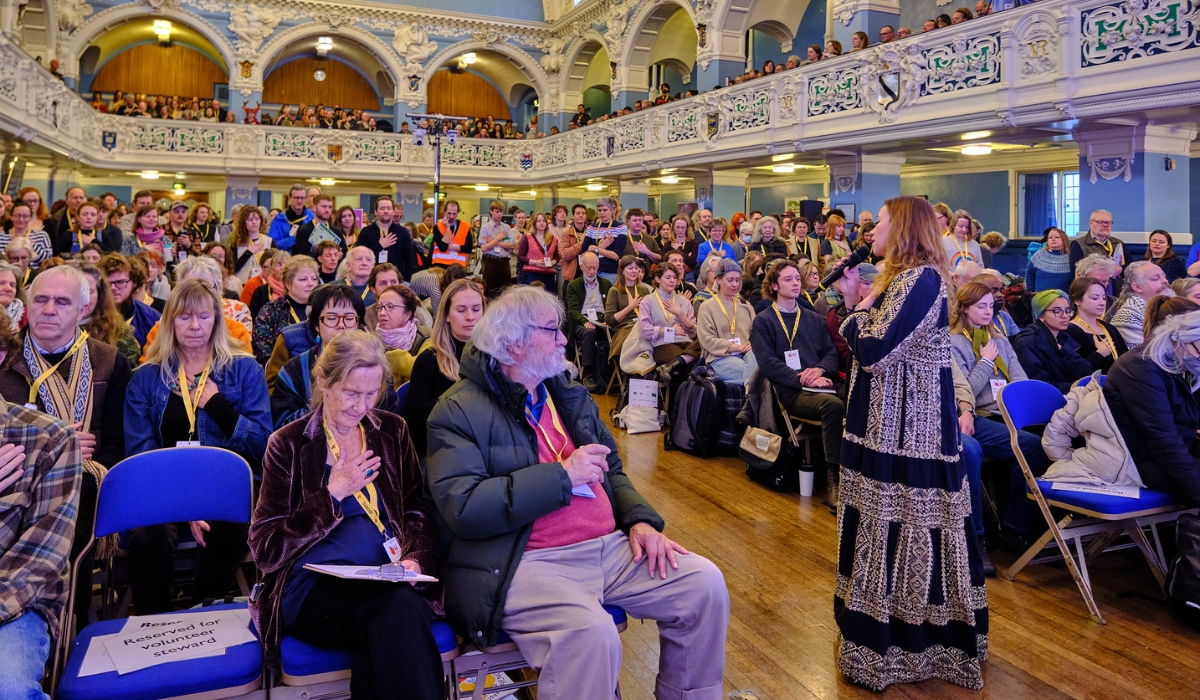
Charlotte Church took part in the opening plenary of ORFC, uniting the audience in song (photo credit to Hugh Warwick)
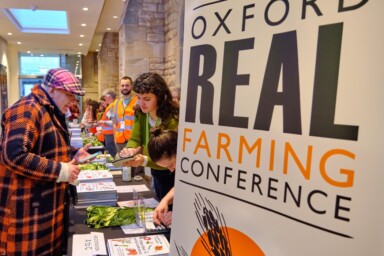
This year’s Oxford Real Farming Conference was another reminder of the energy, creativity and determination across the agroecological farming movement. Alongside a rich programme of talks and workshops, ORFC created space for meaningful conversations, practical exchange and collective reflection.
One of our key sessions, Funding Small Farm Futures, explored how small farms are funded – from market premiums and fairer supply chains to public money that genuinely rewards public goods. The discussion was frank but hopeful, focusing on how value and power can be shifted back to producers and how small farms can be better supported.
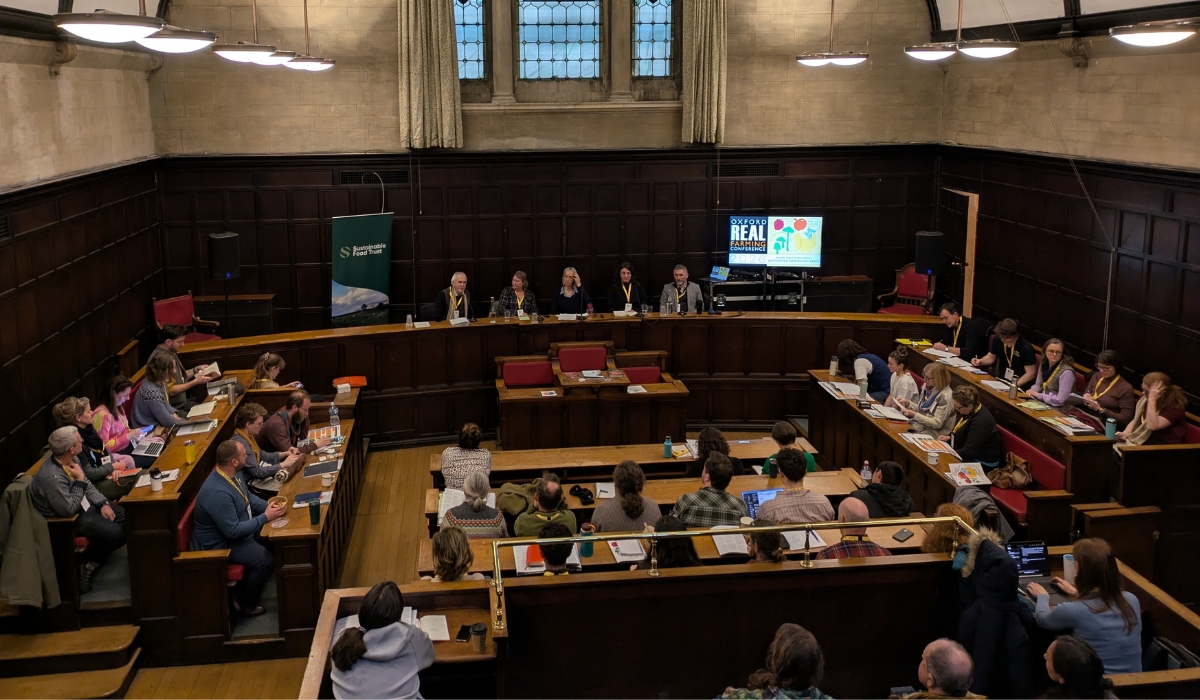
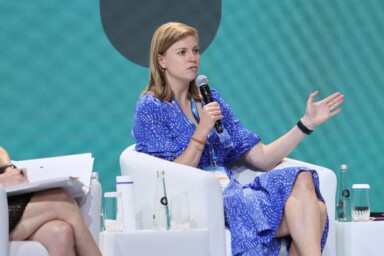
Teresa Allward (organic dairy and beef farmer), Georgina Grimes (Head of Responsible Business at Yeo Valley), India Hamilton (food systems specialist and Founder of HYPHA Consulting) and Edward Morgan (Group ESG Manager at Castell Howell Foods) sit on the panel of our ‘Small Farm Futures’ panel, with our CEO, Patrick Holden, as chair
Our Seeing is Believing! Hosting Events on Your Farm session was extremely well attended and highlighted a growing interest in education and public engagement on farms. With contributions from The Harmony Project, Home Farm, The Apricot Centre and Lopemede Farm, participants shared real-world experiences of running events on farms and explored how on-farm education can engage children in meaningful ways, build community and showcasing sustainable practice. There was clear enthusiasm for stronger networks, collaboration and sharing examples of best practice.
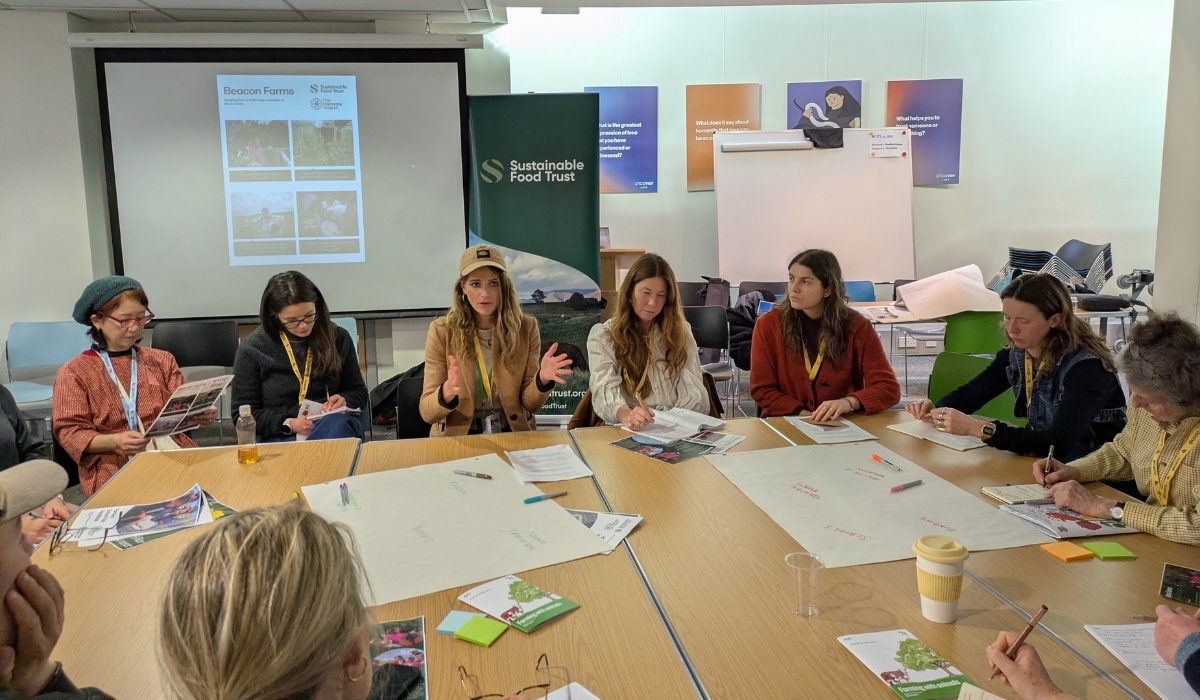
Sophie Gregory (organic farmer and member of the Beacon Farms Network), shares her experience being part of the Network during our ‘Seeing is Believing’ workshop
Our session on Building an Abattoir: Farmers at the Forefront featured innovative new farmer-led projects, from a micro-abattoir on the Isles of Scilly, to a mobile ‘Tiny Trailer Abattoir’ for sheep on Orkney, and a new abattoir project with big ambitions in the Cotswolds. In particular, we heard exciting news that Orkney’s Tiny Trailer Abattoir had just that morning been approved for Scottish Government funding which will meet some of the project’s costs, while a crowdfunder has been set up to raise the rest. The North Cotswold Abattoir Project is also keen to hear from anyone that would be interested in supporting or working with them as they progress plans for a new abattoir, butchery school and restaurant. The session also featured Defra’s Head of Agricultural Sectors Team, John Powell, who reiterated Defra’s support and recognition of the vital role small abattoirs play in meat supply chains, flagging the potential for abattoirs to be funded via Farming in Protected Landscapes and other government funds.
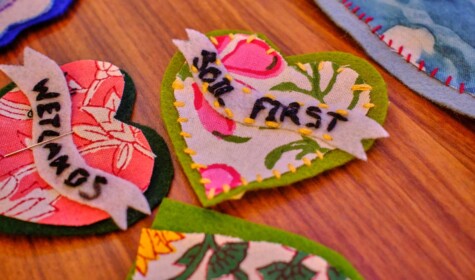
The Working with Wool workshop organised by SFT Head of Policy and Campaigns, Megan Perry, reinforced the importance of skills and craft within sustainable farming systems. Spinning, weaving, knitting, natural dyeing and many other skills have helped develop a deep understanding of the qualities of wool, how to handle it, and how to add value to it. This all impacts how we view sheep production in the UK, turning the tide on wool which had been seen as having no value despite being an incredibly important, sustainable and useful fibre.
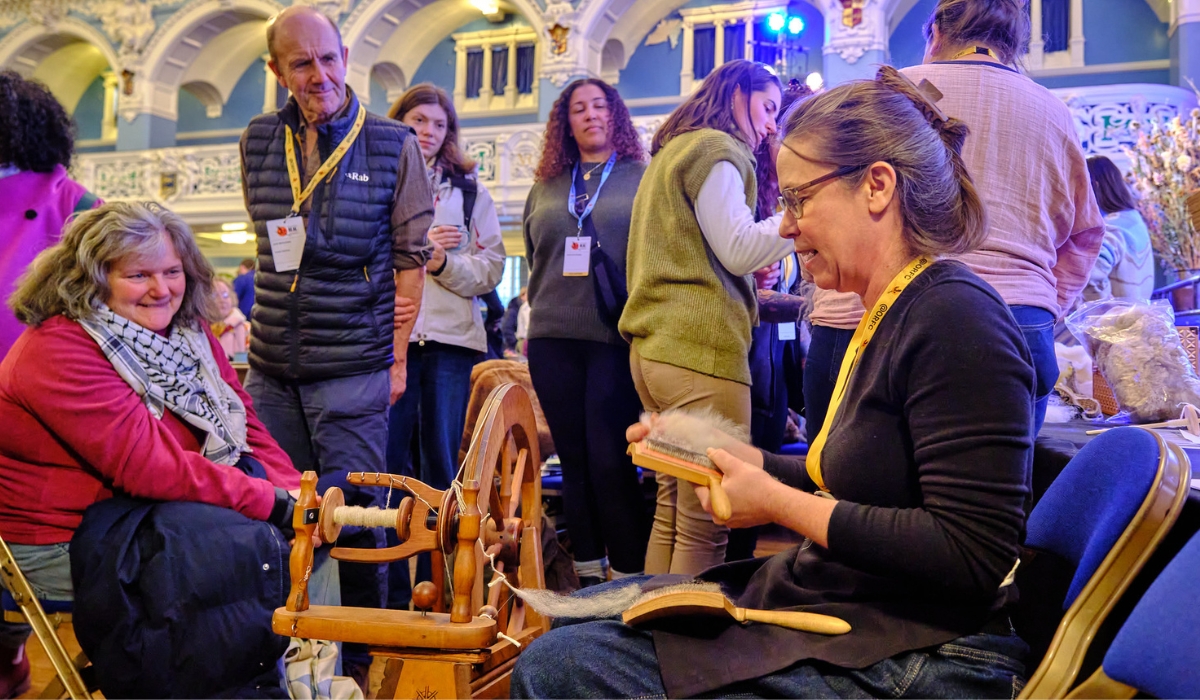
We ran our ‘Working with Wool’ workshop for the third year in a row, showcasing the beauty and
versatility of wool (photo credit to Hugh Warwick)
We also joined the Oxford Farming Conference for a well-attended session on regenerative dairy, where Patrick Holden spoke about the importance of measuring sustainability on farms.
Overall, ORFC left us feeling energised and optimistic. The challenges facing small and agroecological farms are real, but so too is the shared commitment to tackling them together, and the value of coming together to imagine better futures for farming.
All photos courtesy of Bonnie Welch, unless otherwise stated. Featured image courtesy of Hugh Warwick.