In the 1970s there were 2,500 abattoirs in the UK – today there are only 203. Wicked Leeks’s Anna Zuurmond takes a closer look at the ways in which farmers have been affected by the loss of their local abattoir, as well as what this means for consumers and access to higher-welfare, organic meat.
This article was originally published in Wicked Leeks magazine.
The number of abattoirs in the UK has diminished from 2,500 in the 1970s to just 203 today, meaning animals are travelling further and longer to slaughter and fewer farmers are able to sell quality meat direct to consumers.
A recent survey of over 850 farmers by the Sustainable Food Trust (SFT) found that many small farmers would struggle to sell direct to consumers if their local abattoir were to close – smaller abattoirs offer services like private kill, where farmers’ own meat is returned to them by the abattoir for them to sell.
In the absence of this service, many farmers would be forced to sell their meat directly into wholesale markets, which over 58 per cent of farmers in the SFT’s survey deemed to be unprofitable for their business; the knock-on effect then being that consumers have less access to quality local meat.
The survey found that, as a direct result of small abattoir closure forcing them to use larger facilities, 18 per cent of farmers have already been forced to sell off their livestock, and almost a fifth of organically certified respondents (19%) said they have had to stop selling their meat as organic due to lack of access to organic abattoir services.
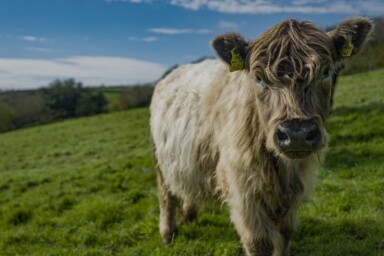
Challacombe farm, based on Duchy of Cornwall land on Dartmoor, Devon, has 20 Welsh Black Bullock cows and 200 Shetland X Icelandic sheep, a small, hardy and non-commercial rare breed which they keep mainly to manage their land.
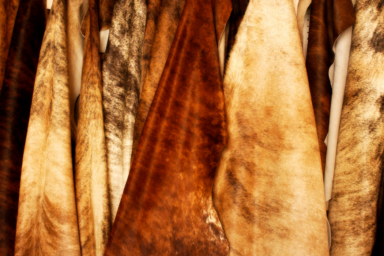
They use local abattoir Gages, just nine miles down the road in Buckfastleigh, for all of their private kill, and then send on the skins to Devonia Sheepskins tannery, a further two miles down the road and the oldest tannery in Britain, to be made into rugs.
“The only journey the animals take off the farm is to the abattoir, and we know exactly what happens to them,” said farm co-owner Mark Owen, who runs the farm with his wife, Naomi Oakley.
Meanwhile, 10 per cent of the 850 farmers surveyed travelled more than 60 miles with their livestock, and many voiced concerns about how, if animal travel time to abattoir increased, it would undermine high on-farm welfare standards, which consumers also want and are willing to pay more for.
“The local abattoir is essential. We take the sheep in the morning, in the afternoon the skins are ready to pick up. You go down there and you see how hard everyone is working, the care that is taken, nothing is hanging around for too long, it’s very quiet in the holding pens – no banging and crashing,” said Owen.
Challacombe Farm’s livestock is organic and 100% grass-fed, with welfare approved by ‘A Greener World’, a strict certification only given when livestock have all-year-round access to fields.
As a result of their local abattoir, which they travel to most weeks, and the tannery next door, Challacombe is able to sell skins and meat direct to people “who understand how we produce [our meat], the impact on the environment, and animal welfare”.
The Lang family, who have run Gages abattoir alongside Dartmoor Butchers for more than 80 years through multiple generations, explained how they offer a mixture of private kill to local farmers, particularly rare breeds, as well as selling local farm meat at their Butchers, and to Riverford.
“Obviously we have complete control in what we’re getting”, said the Lang family, “we didn’t want to start just buying in stuff. We’ve always done our own thing.”
Succession issues
One of the greatest challenges to both their abattoir and Butchers is staffing, particularly with finding young people who are interested, and the Langs said this is something that is “unlikely to improve”.
The average age of abattoir owners in the UK is between 60-70, and getting young people into the industry and succession planning has been a key issue for many small abattoirs, and a factor in the closure of some.
Everything from the lairage, where livestock are held in pens before slaughter, to moving animals and carcasses, makes working in an abattoir a very physically demanding role, particularly with an ageing workforce, even with mechanisation of certain elements.
There are specialised government-funded meat apprenticeships for roles such as butchers, meat processors and abattoir technicians, however between 2019-2025 only 22 abattoir apprentices completed their apprenticeships (just five a year) despite the fact that 82 per cent of abattoirs and butchers said they would welcome an apprentice according to a 2023 National Craft Butchers survey.
A big part of the battle, perhaps unsurprisingly, is making the meat sector an attractive place for young people to want to work, despite the fact it’s a highly skilled job.
Sarah Dyke, Lib Dem MP for Glastonbury and Somerton, who is responsible for securing a debate in parliament for small abattoirs, said: “There should be more on the curriculum on food and farming – all that connection with food, but with rearing animals as well.”
Perhaps abattoir trips for school children would be a step too far, but some kind of secondary school education on how meat is produced is integral to an understanding of food provenance as well as forming a surer route into the meat industry and its potential career paths.
Sheepskins for sale
The falling price that abattoirs get for sheepskins and hides has also been a key driver in small abattoir collapse. The Lang family told me that 15 years ago, you would get £6-8 for a sheepskin, whereas now you have to pay £1.60 per skin to have them taken away, whilst cow hides have reduced from around £45-50 per hide to £4-5 in the last 15 years.
Over this short period of time, skins and hides have gone from a valuable byproduct, that many farmers say covered the operational costs of slaughter, to an additional cost-to-bear for farmers, particularly as collectors and renderers charge small abattoirs more to carry out small scale collections of skins and hides.
The Langs commented on how this is largely a result of the Chinese and Turkish markets which account for 84 per cent of the value of all worldwide sheepskin exports, adding that, “There’s no UK market for it now.”
As a result of this cost, only around 1 per cent of UK sheepskins are believed to be used, with over 15 million discarded every year, and some abattoirs even paying for hide shredders to effectively dispose of it themselves.
Owen told me how people “absolutely love” their organic sheepskin rugs, produced at Devonia Sheepskins, one of few remaining of 21 UK tanneries; a small-scale example which shows how skins and hides could be viewed as a valuable and beautiful byproduct once again and help the meat industry close that loop.
This is before we factor in the other costs that consumers don’t see – all the waste, such as entrails, that gets sent to renderers to be processed into biofuel and pet food, as well as the compulsory staining and later incineration of certain parts of the animals for disease prevention.
Whilst it’s not the loveliest conversation to have over your Sunday roast, it’s another reason, along with how an animal is reared, that a consumer may consider paying a bit more for your small-scale butcher-bought lamb that was killed in a small abattoir, rather than something that was both industrially produced and killed.
Support for local abattoirs
A huge win for abattoirs this year was the retention of the FSA (Food Standards Agency) 90 per cent discount on veterinary charges for small abattoirs – a massive relief when the hourly rate of on-site vets, who must oversee the abattoir at all times, increased by 17.7 per cent in 2025 alone.
Now the Abattoir Sector Group (ASG) are calling for more ring-fenced funding support for this sector.
This could include the reopening of the Small Abattoir Fund, a £4m budget opened under the conservatives, of which just over a 1m has ever been allocated, and has now been discontinued.
This is particularly important in keeping small famers in business, but also in keeping prices of quality meat accessible for consumers, with one third of farmers surveyed by the SFT saying they will have to push meat price hikes onto consumers if slaughtering charges by the FSA continue to rise.
Sarah Dyke MP has said that the whole relationship with the FSA must go further:
“I want to see a marked change in the FSA’s relationship with these businesses. Yes, of course food safety is paramount but we’ve got to look at it differently. Small abattoirs do a different job to high output abattoirs. They deal with rare breeds, organic, bespoke slaughtering – that job needs to be recognised.”
She criticised the punitive nature of surprise arbitrary inspections by the FSA, and the lack of administrative co-operation in working with smaller businesses.
“You need big abattoirs for supermarkets and small abattoirs for small producers”, says Mark Owen from Challacombe, as a larger facility is not designed to take the 2-3 animals that he’ll bring to slaughter.
This debate becomes paramount as we see an influx of international trade deals on meat, including a trade deal with the US that will lift tariffs and open up the UK market to US beef, whilst ASDA has proudly started stocking Uruguayan beef.
These threaten to undercut the prices of UK meat, just as milk and butter imports did in late autumn last year, causing a tumbling farmgate price, and many consumers unknowingly buying US butter and milk from supermarkets.
It’s therefore all the more integral that we support our local infrastructure – from farm to abattoir, to butcher, to tannery – and ensure that the small businesses working together to provide consumers with high-welfare British meat will not become a figment of the past.
To find out more about the SFT’s work with local abattoirs, click here.
Featured image by Christian Kay.