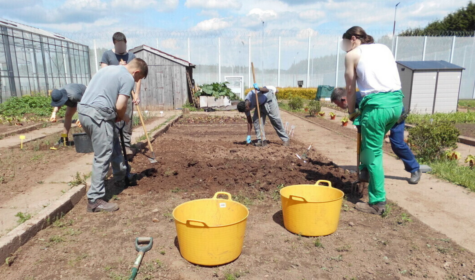
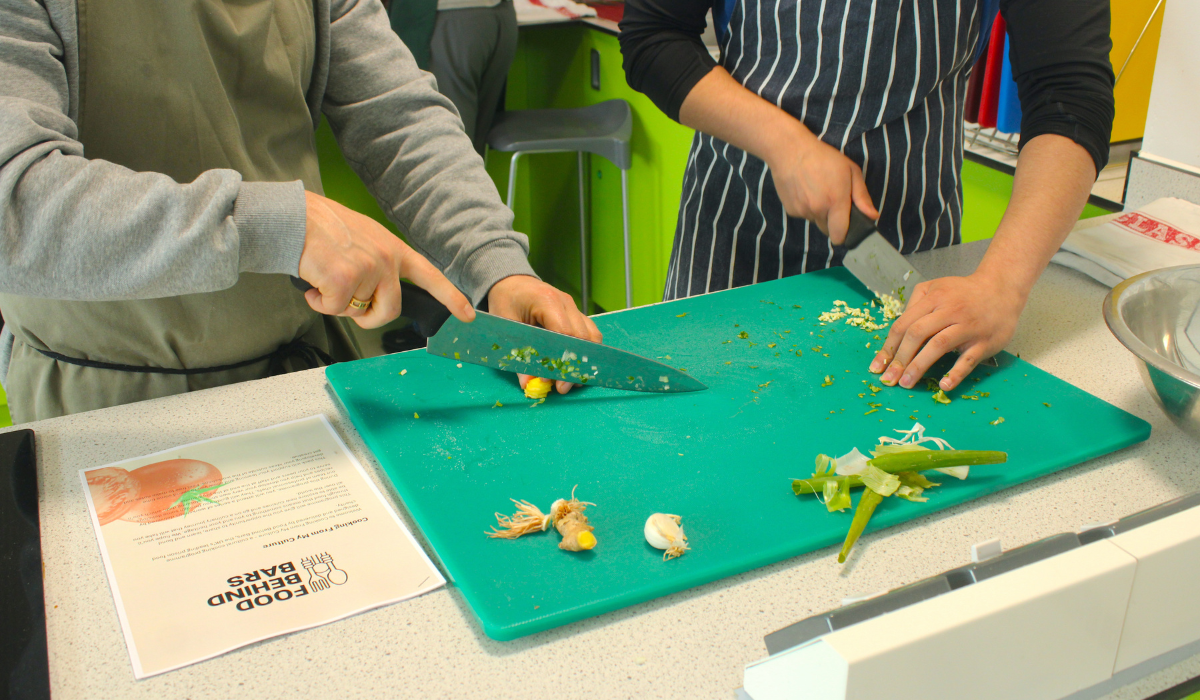
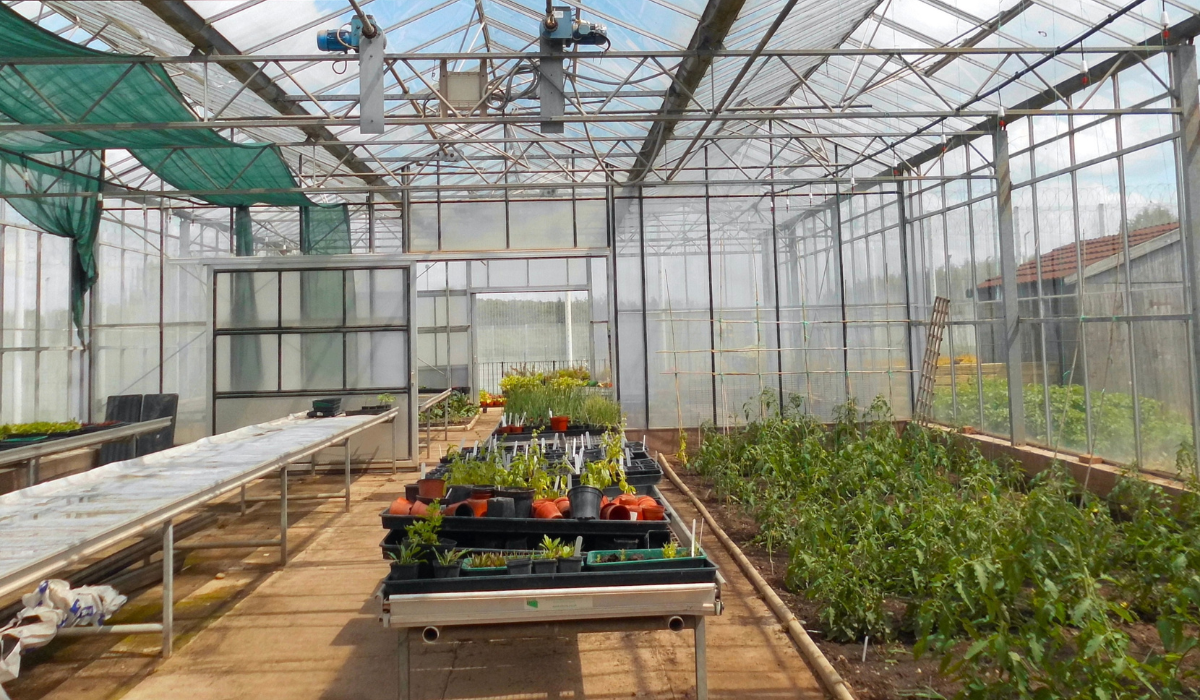
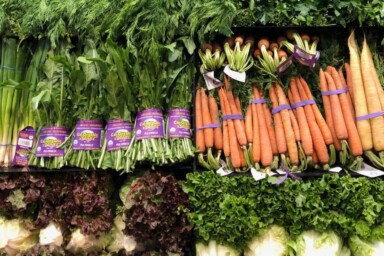
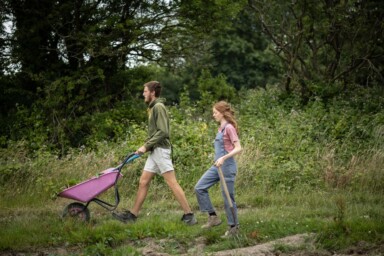
The kitchen garden at HMP Swinfen Hall. Picture courtesy of Food Behind Bars.
Many prisons do already grow some food, often supported by brilliant projects run by charities such as Food Behind Bars. However, getting this produce from garden to kitchen is difficult, much to the frustration of those who help to grow it. For example, for catering managers working under intense time and cost pressures, a delivery of pre-prepared frozen potatoes is, quite understandably, more practical than receiving sacks of freshly harvested, muddy ones that need washing, peeling and cooking. In other prisons, a major problem is the lack of outdoor space for growing, especially in Victorian prisons, and, frustratingly, this was not prioritised in the design of several new prisons either, despite these being labelled as ‘green’ due to their use of renewable energy.
But this hasn’t always been the case. Before prison food procurement became increasingly centralised from the late 1990s, the prison estate was close to being self-sufficient. At its peak in the early 1990s, prison farms and gardens covered 14,000 acres, producing enough fresh meat, milk, fruit, vegetables, and even wheat for milling, to feed some 47,000 people. Today, that area has dwindled to around 500 acres. A coordinated supply chain network allowed prisons to share produce between sites, while any shortfalls were often made up through local sourcing, such as meat from nearby abattoirs that would then be butchered in-house. (For more information, the book Outside Time by Hannah Wright gives a detailed and fascinating history of prison farms and gardens in England and Wales).
Not only did this system provide nutritious and sustainable food – all of it organic, as the use of agrichemicals is, unsurprisingly, prohibited – it also created valuable opportunities for people to learn practical skills and spend time outdoors. This stands in stark contrast to today’s reality, where some prisoners report spending up to 22 hours a day locked in their cells.
The Sustainable Food Trust’s An Action Plan for Greener Prisons report, published in 2019, set out a clear vision for how prisons could be reshaped with a focus on the natural environment, food and growing. Using HMP Bristol as a case study, it demonstrated how, even with limited space and resources, the prison interior and exterior can be creatively adapted, and how food- and land-based activities, from horticulture to beekeeping, can provide meaningful opportunities for learning, wellbeing and connection. Following the publication of the report, HMP Bristol invested in a new polytunnel, a flock of chickens and several beehives.
Encouragingly, the new food policy framework asks prisons to “take account of opportunities for health promotion activities”, including education around healthy eating. It is heartening to see that several of the Greener Prisons report’s recommendations, from making greater use of food grown on site to expanding educational opportunities, are now reflected in national policy, even if they are not directly enforceable and come without any additional funding. There is still a long way to go, but if these principles were adopted across the prison estate, as part of a genuinely ‘whole-prison approach’ to food and rehabilitation, the potential for change is significant. Now is the time for government to maintain this momentum, working with and supporting prisons to deliver their new policy and improve the lives of everyone affected.
Want to know more about food in prisons? Read An Action Plan for Greener Prisons here.