What Not to Eat
Directed by Mickey Bishop
Where to watch: Free to stream on Channel 4 here.
Recommended by Alicia Miller
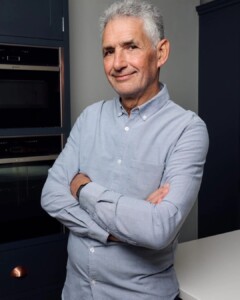
In What Not to Eat, Dr Tim Spector and GP Dr Kandi Ejiofor take a good look at what many families across the UK are eating and how it’s affecting their health. Ultra-processed food has become increasingly ubiquitous and many a household are now dependent upon it, consuming it in large quantities. For Spector and Ejiofor, it’s time to return to real food.
The series follows four families living in different parts of the UK who eat a staple diet of ultra-processed food. Spector and Ejiofor are working to turnaround the health of these families, getting them to recognise the impact of what they eat by showing them, quite literally, how much ultra-processed food they consume – from a bathtub of pot noodles to buckets of Coca Cola.
In between, Spector learns about what goes into ultra-processed products, finding that the meat isn’t really meat, the custard isn’t really custard and there is a vast world out there where food is manufactured to have almost no nutritional value. This should be something of a wake-up call to anyone watching the series – it’s really time to interrogate your food! Realising what goes into ultra-processed food might just make you want to cook real food again.
Getting people to change dietary habits isn’t easy and cooking from scratch is something that many people struggle with, but the impact of consuming significant amounts of ultra-processed foods takes its toll and the dangers of obesity, diabetes and general poor health far outweigh what it would take to change a few habits. At the end of the series, remarkably, everyone has lost some weight and almost everyone is eating healthy home cooked food. The question that remains is, will it stick?
Derek vs Derek
Directed by James Dawson
Where to watch: Sheffield DocFest on Friday 12th June.
Recommended by Alice Frost
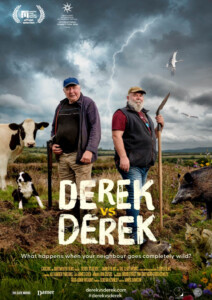
If you’re going into Derek vs Derek expecting farmer on farmer fisticuffs, you’ll be disappointed. What this film offers instead is an informative, accessible, comical and, at times, heartwarming insight into the lives of Derek Banbury and Derek Gow: two men, both called Derek, both owners of acres of land in Devon but totally opposed in what they believe is the best way to manage and maintain their land.
Derek Banbury is an intensive dairy farmer who’s been in the business for 50 years. Before him, his father did the same for 80 years – farming is quite literally in Derek’s blood. He’s committed to supplying the world with food and is steadfast in his methods of doing so and professes that he won’t change. Bordering his farm is Derek Gow, a former sheep farmer who has since dedicated his life to transforming his farm into a haven for wildlife and recovering endangered native species: “This is my land and I’m going to heal it”, he declares.
Though their methods and beliefs might not necessarily align, what both Dereks undoubtedly share is a fierce dedication and passion for doing what they each believe to be the right thing – inspiring to watch regardless of where you stand on their approaches to farming.
Derek vs Derek provides an equal parts entertaining and educational gateway into timely topics such as food production, rewilding and nature restoration, with the hope that it ignites conversation and debate with its audience, long after the credits have finished rolling.
You can catch Derek vs Derek at Sheffield DocFest on Friday 12th June. To find out about screenings near you, sign up here to receive updates, or for more information on hosting a screening, click here.
Protein: Everything You Need to Know
Directed by Liam Royales
Where to watch: Free to stream on Channel 4 here.
Recommended by Marina Suarez

Protein: Everything You Need to Know explores the modern obsession with high-protein products. Host Gemma Atkinson, alongside a panel of experts, argues that while protein is a vital macronutrient, the food industry has created a £20 billion protein industry, characterised by ‘protein washing’ – using health claims to upsell expensive, ultra-processed products (UPFs).
The programme’s greatest strength is its ability to translate complex nutritional science into consumer advocacy. Dr. Yanaina Chavez-Ugalde provides a standout segment on protein washing, exposing how brands manipulate calorie ratios to slap a ‘high protein’ label on products that are essentially ultra-processed concoctions. The revelation that some protein flapjacks contain more sugar and calories than a Krispy Kreme donut – or that high-protein bread is 37% more expensive for a negligible 1g protein increase – is a wake-up call for the budget- or health-conscious viewer.
The expert panel, including Dr. Rupy Aujla and Dr. Emily Prpa, shifts the focus back to ‘whole-food synergy’. By contrasting misleading social media trends, or hacks like ‘dirty sodas’ (diet cola mixed with protein shakes), with nutrient-dense meals like the prawn and lentil curry, the film illustrates that protein shouldn’t be isolated. It highlights the ‘fibre gap’, noting that our hyper-fixation on protein often leads us to neglect the very nutrients that prevent chronic disease.
Atkinson’s journey through a massive Liverpool production factory provides a rare look at the industrial scale of whey processing, effectively categorising these powders as UPFs. However, the film remains balanced, offering tailored advice for specific demographics and dietary preferences.
Ultimately, Protein: Everything You Need to Know is a concise, punchy critique of modern food trends. It empowers viewers to stop looking at the ‘high protein’ claims on the front of the box and start reading the ingredients on the back. It’s a compelling argument for returning to the simplicity of whole foods, where hemp seeds and lentils outperform expensive, synthetic alternatives.
Finding Harmony: A King’s Vision
Directed by Nicolas Brown
Where to watch: Free to stream on Amazon Prime (subscription required) here.
Recommended by Alicia Miller
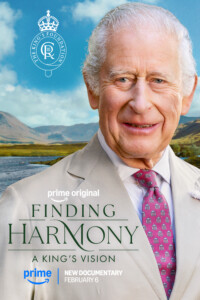
Finding Harmony: A King’s Vision brings to the fore King Charles’ deep and abiding concern for the natural world. For the British monarch, “we must put nature back at the heart of the equation.” It is a sentiment that has driven him from his youth and through his life as a whole. His realisation of what was happening to nature as the world became increasingly industrialised, became a critical concern.
Highgrove House was the test bed for The King’s exploration into organic farming, and it was not an easy road for him at first, especially with the press bearing down on him for his arguably radical ways. Patrick Holden, the Sustainable Food Trust’s CEO, was previously head of the Soil Association and he came to know the, then, Prince well. As Patrick says in the film in reference to The King’s critique of industrial agriculture, “…then along comes the Prince of Wales saying, ‘now that’s not right’…” Through the years Duchy Originals – an organic food brand founded by The King – became a huge success raising money for a range of charities. The ethos behind the brand was grounded in The King’s thinking about harmony and sustainability and how to embed this in business, agriculture and society more broadly.
The Harmony Principles are based around ‘enquires of learning’ – inviting young people, in particular, to explore what nature brings to our understanding of the world and how exceedingly valuable it is. There is an interconnection between the natural world and our lived one, that is vital to preserve. Understanding this interconnection and its importance lies at the root of harmony.
In 1991, the then Prince played an instrumental role in convening the Earth Summit, creating a ‘blueprint’ for environmental protection of the planet – which was deeply contentious – yet he still managed to move the conversation on climate change forward. He has continued throughout his life, to play key role in convening groups of people and engaging them in the importance of harmony and what it brings to the world. Dumfries House sits at the centre of his work with the King’s Foundation. It started as a way to revive and restore a place and engage with a local community, offering potentially life-changing opportunities to people. Over time that work has expanded in extraordinary ways and is now evident on a global scale.
Finding Harmony gives a window into what has driven The King in this lifelong quest to share the transformative role that Harmony can play in our lives and to advocate for humanity as “part of nature, not apart from nature”.
Flourish
Directed by Christopher Baker
Where to watch: Flourish had its premiere screening at the end of May. Keep an eye on Flourish Produce and Christopher Baker’s instagram pages for more details on upcoming screenings and release. Watch the trailer here.
Recommended by Alicia Miller
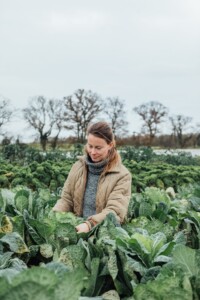
Calixta Killander is one quite remarkable woman. Coming from a farming background, her farm Flourish has received many awards – most recently BBC Best Food Producer 2025. She is also a Nuffield Scholar. Flourish started as a small farm in South Cambridgeshire in 2017, but it has expanded significantly since then to 80 acres – and they grow just about everything.
Killander learned a lot from her time in the US, where she attended university and worked on a variety of farms across the country. Coming back to the UK, she faced the question of what to do and how to sell her lovely produce – and smartly, she found a market in high end restaurants. It was to be just one of the avenues of Flourish – engaging chefs and front of staff to come and get their hands in the soil of Flourish was a hit.
But while everything may seem full speed ahead, like many small farms, farming isn’t an easy win all the time. In a staff meeting, Calixta acknowledges that the farm will not be profitable this year and they had to let some people go, which had knock-on effects for the starting season.
The film is honest in its portrayal of the difficulties and frustrations of growing and that while regenerative practice is vital, it can still have its problems – learning by doing is always essential.
Good, healthy, sustainably produced food is so important for our minds and our bodies, and small farms like Flourish have so much to offer in sustaining our health, our land, our biodiversity and our lives as a whole.
Featured film posters courtesy of Channel 4, James Dawson, The Kings Foundation and Flourish.