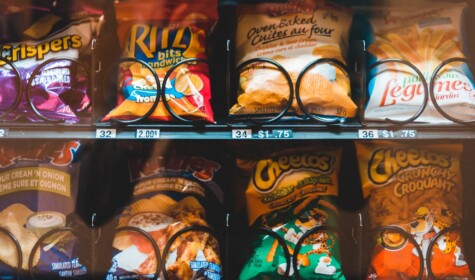
Ultra-processed foods are everywhere – and now some of the world’s biggest food companies are being called to account. Victoria Halliday, the Sustainable Food Trust’s Communications Manager, looks at the evidence behind the health risks, cultural impacts and rising scrutiny of these products.
Recently, the city of San Francisco sued 10 leading food makers over their ultra-processed products. The accusation is that these companies are knowingly selling foods that have been linked to a rise in serious diseases, with comparisons being made to the tobacco industry. These ultra-processed foods (UPFs) make up an ever-increasing proportion of our diets – now accounting for over half of the food we’re eating in the UK and 60% in the US. Given that the latest research shows UPFs are associated with rising ill-health across the globe – from heart disease to depression – this raises urgent questions.
While our appetite for highly processed products is seemingly growing, it’s encouraging that the subject of better food and farming is breaking into both mainstream and fringe cultural discourse, from prime-time TV to post-punk poetry. Confrontational ‘no-wave’ poet and musician, Lydia Lunch (pictured), speaks of how heavily processed foods mean “we end up consuming so much poison”, while Happy Mondays’ lead singer, Bez, talks about replacing processed juices with fresh oranges, “preferably organic so there’s no pesticide sh*t in them”. And the issue is being covered through more mainstream channels too – from Joe Wicks’ Licensed to Kill on Channel 4, to Tim Spector’s popular science work on gut health and diet.

These voices can be incredibly powerful in helping to shape opinions and behaviours – most of us are much more likely to pay attention to a cultural figure whose work or opinions resonate with us, than to the earnest words of NGOs, politicians or policy experts. But whoever might be delivering the message, the facts on UPFs are becoming hard to ignore. As San Francisco’s case makes its way through the courts, it highlights three core claims that sit at the heart of the growing challenge to ultra-processed foods.
- They’re engineered to be addictive
UPFs are designed to reel us in and keep us hooked. Food companies pour vast sums into engineering foods – or “food-like substances” as author Michael Pollan refers to them – that light up our brains’ reward centres due to their ‘hyper-palatability’. Combinations of high levels of sugar, salt and fat, as well as softer textures and artificially intense flavours, lead to cravings and a desire to eat more – so we end up eating too many calories but not enough nutrients.
The corporations behind these ‘foods’ are using increasingly aggressive tactics to drive consumption, influence research and prevent regulation. Although these companies put a lot of resources into advertising, seeking to persuade us that we have endless choice and novelty, the proliferation of UPFs means that we are, in fact, finding ourselves with fewer and fewer real options – just picture a supermarket shelf stocked with 20 different brands of ultra-processed, plastic-wrapped bread.
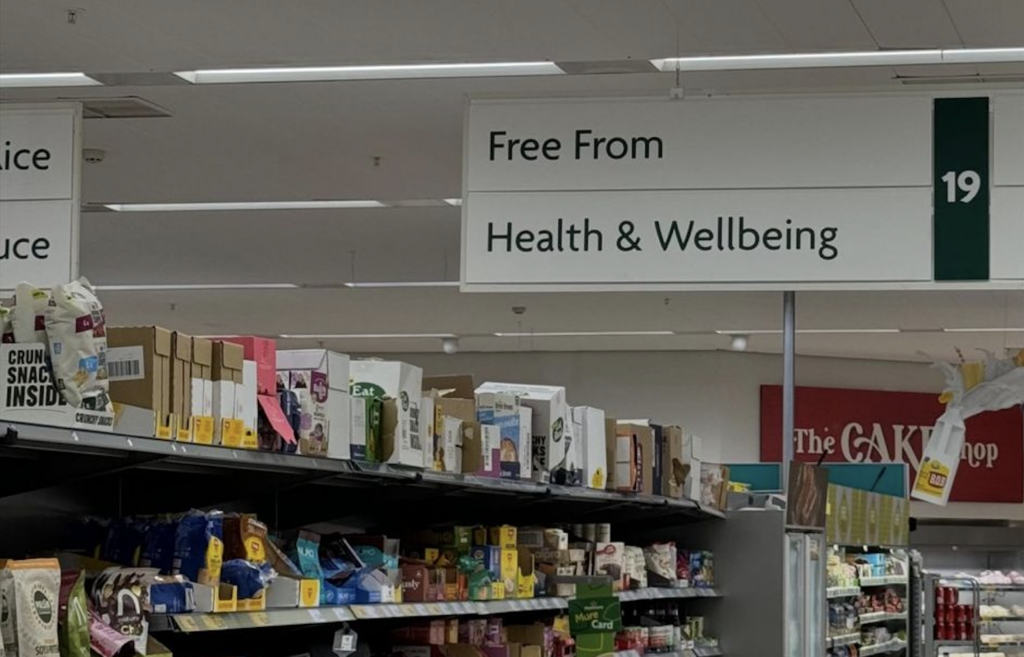
While addiction and craving are baked into the UPF business model, we’re encouraged to push blame onto each other (and ourselves) for not making better food choices as individuals. Our personal choices are powerful, and we can advocate for the type of food system we want by directing our spending accordingly – but the reality is that ultra-processed foods make up an ever-increasing proportion of what is available to buy in many supermarkets, especially in lower-income areas. The finger-pointing narrative serves as a smokescreen, diverting our frustration away from those making vast profits at the expense of public health and wellbeing.
- They’re harming our bodies – and more
UPFs have been linked to harm in all our major body organs. The Lancet recently published major new research showing that the more UPFs we eat, the more likely that we will suffer from obesity, type 2 diabetes, hypertension, heart disease, Crohn’s disease, kidney disease, depression and many more conditions that result in ill-health and mortality. Professor Carlos Monteiro, one of the Lancet series authors, says this latest evidence “strongly suggests that humans are not biologically adapted to consume [UPFs]”.
Of key importance is the impact that UPFs have upon our gut microbiome – an intricate community of around 100 trillion microbes that live in our intestines. This microbiome is a major modifiable factor in our health and wellbeing, as explained by Tim Spector on the SFT Podcast: “A lot of the chemicals in your brain that transmit mood – and other states like fullness and hunger – are produced as chemicals, as your microbes digest plants. [These chemicals] go up into the bloodstream, into your brain, into the vagus nerve and can make the difference between you feeling happy or sad.” As well as mood, our gut microbiome influences many other aspects of health, including immunity, metabolic health and disease prevention.
While consumption of gut-damaging UPFs is on the up, the amount of fresh produce we consume is falling – a big problem for the health of our gut microbiome which depends upon a wide diversity of fresh foods. Fresh foods that have been grown in healthy soils and without agrichemicals provide us with unique fibres, polyphenols, and nutrients that feed different beneficial gut microbes. Which leads us to…
- They’re crowding real foods off our plates
UPFs are pushing whole foods off our plates. This is a pattern being repeated across the globe – with the UK and US leading the charge. The impact on our health alone should be reason enough to resist this trend, yet the effects extend beyond this.
Food processing used to be mainly concerned with preservation of whole foods, as well as making them easier to use in the kitchen. Processing techniques varied from place to place – from fermenting cabbage to produce kimchi in Korea, to jellying eels in London’s East End. Now, industrial food processing is increasingly aimed at creating food-derived substances that take the place of whole foods entirely.

Long-established methods like freezing, drying, canning, pasteurisation and salting, largely preserve the natural composition of foods, whereas UPF technologies significantly alter them, mixing in industrial additives like plant protein isolates, mechanically separated meat, modified starches and oils, artificial colours, flavour enhancers, non-sugar sweeteners and emulsifiers.
As UPFs become ever more ubiquitous, they flatten regional food cultures, replacing distinctive local cuisines with the same globally standardised products. Food that once reflected place, season and tradition is reduced to a uniform commodity – weakening local food economies, eroding cooking skills and severing the connection between people and the land that feeds them.
Will 2026 dish up a moment of reckoning for UPFs?
So, as the evidence mounts against UPFs, what comes next? Putting limits on the influence and reach of UPF manufacturers through regulation and taxation is essential; the ban on pre-9pm junk food adverts, which came into effect this week, is a small but significant step forward.
The costs of the harm caused by these foods – or, at least, a significant proportion of those costs – needs to be borne by those who profit from them, not by the public, an approach that the SFT advocates through its True Cost Accounting work. We as citizens also need to be educated, encouraged and supported to make healthier food choices – and those healthy choices must become the easier, more affordable option.
While the outcome is yet to be decided, the San Francisco lawsuit marks a significant escalation in how local governments are challenging food industry practices on public health grounds and could be the beginning of serious change. With mounting evidence, stronger regulation and growing public awareness, UPF manufacturers may finally be facing a crunch point.
Interested to learn more about what’s in our food? We recommend this episode of the SFT Podcast where Patrick Holden and Stuart Oates discuss UPFs, chemicals in food and what we can do about it.
Image credits: Image 1 (Lydia Lunch): Creative Commons; Image 3 (serving food at market): Mike Swigunski







.jpg)