Is prison food finally getting an upgrade?

  • 03.02.2026
  • article
  • Labour and Livelihoods
  • Social Justice
  • Imogen Crossland

In February 2026, a new Prison Food Policy framework comes into force for all prisons across England and Wales. SFT’s Senior Research Officer, Imogen Crossland, takes a closer look at the framework and explores what it could mean for the quality and procurement of the food served in prisons.

For years, prison inspections have painted a bleak picture of the food served behind bars, with serious and wide-ranging consequences for those who eat it. Unlike schools or hospitals, prisons are responsible for providing virtually all the food that people eat, often for months or years at a time. What ends up on the plate, therefore, matters enormously.

However, for the past 16 years, the guidance available to prison governors and their catering teams has been shockingly minimal. A four-page document published in 2010 set out plenty of food safety regulations, but as far as the meals themselves were concerned, the advice was lifted from the ‘Prison Rules’ legislation written in 1999: 

“The food provided shall be wholesome, nutritious, well prepared and served, reasonably varied and sufficient in quantity.”

Unsurprisingly, this did little to guarantee a healthy, balanced and enjoyable diet for people in prison.

That may now be about to change. In July 2025, the Government published an updated Food in Prisons Policy Framework, due to take effect in February 2026. The new document is ten pages long, accompanied by a 106-page guidance manual. While the document’s length does not guarantee better food on the plate, clearly a little more thought has gone into it this time around.

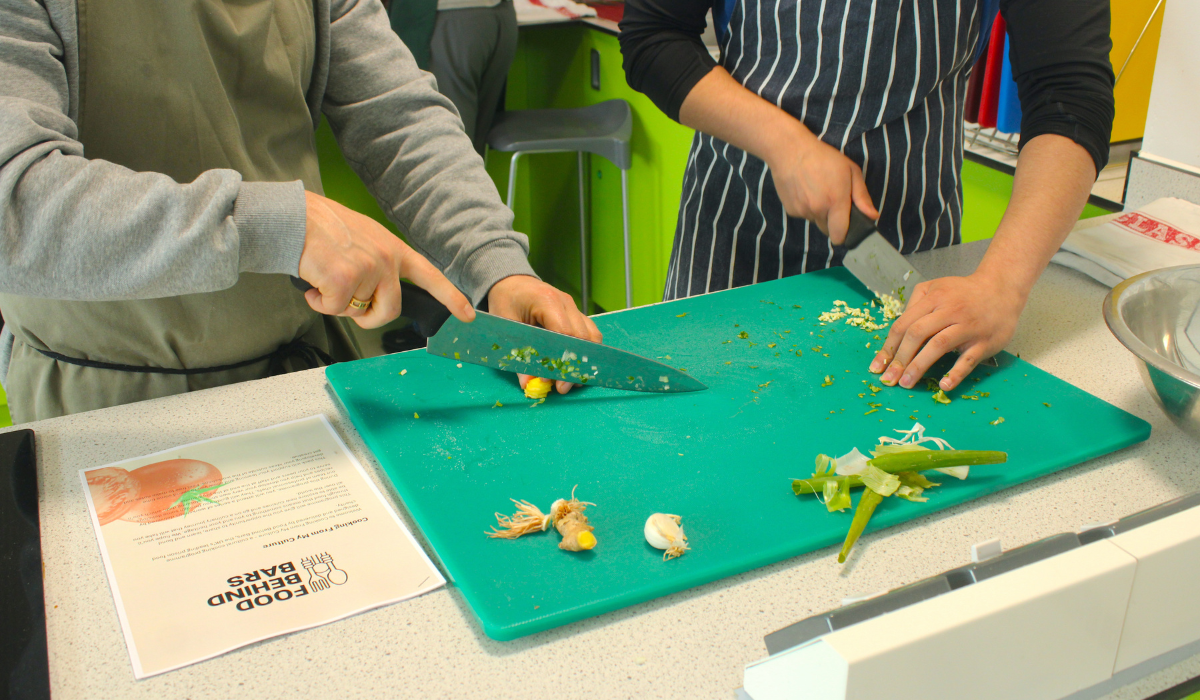
A cooking class taking place at HMP Bristol. Picture courtesy of Food Behind Bars
A cooking class taking place at HMP Bristol. Picture courtesy of Food Behind Bars.


So, what does it say?

To begin with, the framework explicitly recognises that food is more than just a functional part of prison life. It acknowledges the importance of food for physical health, mental wellbeing and social connection, something that has been proven time and time again through academic research and projects on the ground. It also explains that “combining nutritious food with education promotes recovery, reduces reoffending and supports reintegration into the community.” In other words, food is part of the rehabilitation process.

The framework introduces a set of new standards which, while they may sound basic, represent a significant step forward in a system where meals are frequently described as beige and lacking in nutrition. Prisons will now be expected to provide at least five portions of fruit and vegetables a day, limit the availability of unhealthy and ultra-processed foods, and include beans and pulses across a wider range of dishes, not just vegetarian options.

Where catering managers design their own menus rather than using centrally provided ones, these must now be nutritionally analysed by a qualified professional. Menus should also be more varied, running on a minimum four-week cycle without repeating dishes. If properly implemented, which will prove to be a major challenge for reasons touched on below, these changes could lead to more fresh, nourishing and enjoyable meals.

But the framework goes even further. When designing menus, prisons are asked to consider seasonality and, “where possible” to source sustainable, British and locally produced ingredients. This could, it suggests, include fruit and vegetables grown in the prison farms and gardens, or meat from locally reared animals.

By recent standards, this is a refreshingly ambitious addition, though making it a reality will not be easy. For a start, the guidelines on sustainability are not mandatory and therefore unlikely to be monitored or enforced. Technically, prisons must comply with the Government Buying Standards for Food and Catering Services (GBSF), but, as many have pointed out, there are loopholes which negate the need to source sustainably if it results in significantly higher costs. In addition, all food for the prison estate is currently procured through a single Ministry of Justice contract, leaving governors with virtually no flexibility to buy from alternative suppliers, even if they wanted to. Hopefully, the Government’s wider commitment to 50% local or sustainable food procurement, alongside initiatives like the Buying Better Food and Drink Framework, will help open the door to more dynamic procurement, benefitting not only people in prison, but also providing a market for local agroecological farmers and growers.

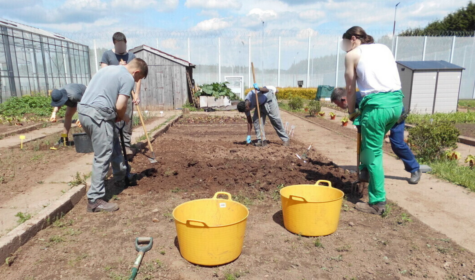
Kitchen garden at HMP Swinfen Hall
The kitchen garden at HMP Swinfen Hall. Picture courtesy of Food Behind Bars.


Many prisons do already grow some food, often supported by brilliant projects run by charities such as Food Behind Bars. However, getting this produce from garden to kitchen is difficult, much to the frustration of those who help to grow it. For example, for catering managers working under intense time and cost pressures, a delivery of pre-prepared frozen potatoes is, quite understandably, more practical than receiving sacks of freshly harvested, muddy ones that need washing, peeling and cooking. In other prisons, a major problem is the lack of outdoor space for growing, especially in Victorian prisons, and, frustratingly, this was not prioritised in the design of several new prisons either, despite these being labelled as ‘green’ due to their use of renewable energy.

But this hasn’t always been the case. Before prison food procurement became increasingly centralised from the late 1990s, the prison estate was close to being self-sufficient. At its peak in the early 1990s, prison farms and gardens covered 14,000 acres, producing enough fresh meat, milk, fruit, vegetables, and even wheat for milling, to feed some 47,000 people. Today, that area has dwindled to around 500 acres. A coordinated supply chain network allowed prisons to share produce between sites, while any shortfalls were often made up through local sourcing, such as meat from nearby abattoirs that would then be butchered in-house. (For more information, the book Outside Time by Hannah Wright gives a detailed and fascinating history of prison farms and gardens in England and Wales).

Not only did this system provide nutritious and sustainable food – all of it organic, as the use of agrichemicals is, unsurprisingly, prohibited – it also created valuable opportunities for people to learn practical skills and spend time outdoors. This stands in stark contrast to today’s reality, where some prisoners report spending up to 22 hours a day locked in their cells.

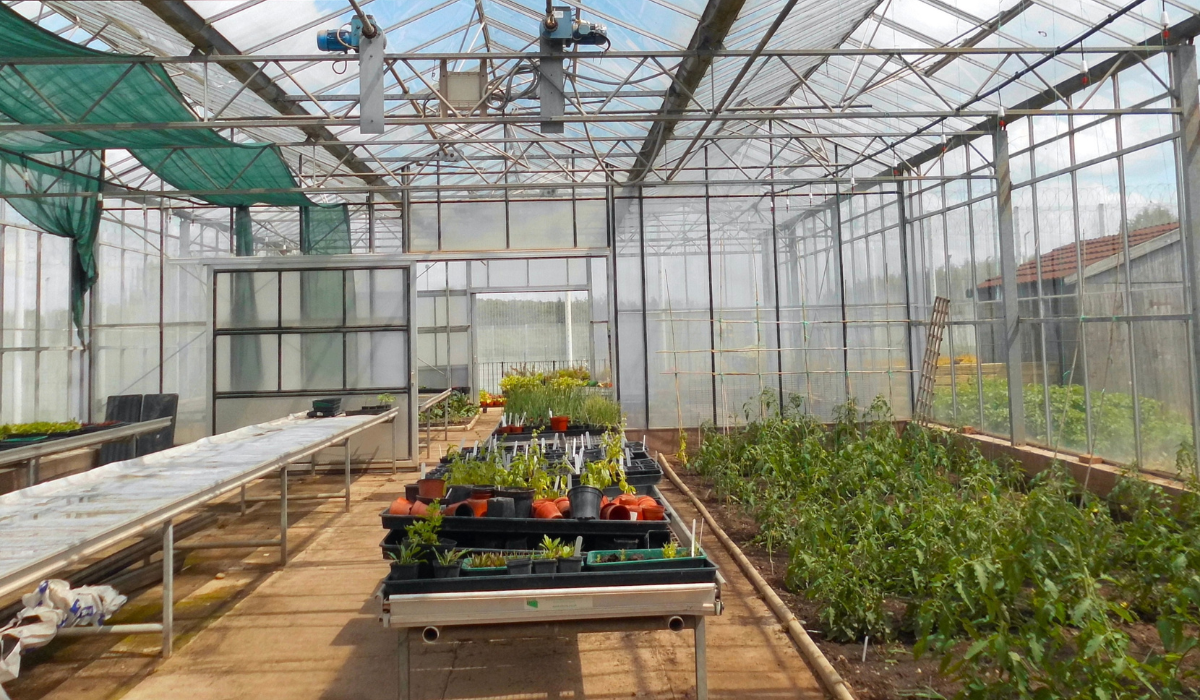
The Sustainable Food Trust’s An Action Plan for Greener Prisons report, published in 2019, set out a clear vision for how prisons could be reshaped with a focus on the natural environment, food and growing. Using HMP Bristol as a case study, it demonstrated how, even with limited space and resources, the prison interior and exterior can be creatively adapted, and how food- and land-based activities, from horticulture to beekeeping, can provide meaningful opportunities for learning, wellbeing and connection. Following the publication of the report, HMP Bristol invested in a new polytunnel, a flock of chickens and several beehives.

Encouragingly, the new food policy framework asks prisons to “take account of opportunities for health promotion activities”, including education around healthy eating. It is heartening to see that several of the Greener Prisons report’s recommendations, from making greater use of food grown on site to expanding educational opportunities, are now reflected in national policy, even if they are not directly enforceable and come without any additional funding. There is still a long way to go, but if these principles were adopted across the prison estate, as part of a genuinely ‘whole-prison approach’ to food and rehabilitation, the potential for change is significant. Now is the time for government to maintain this momentum, working with and supporting prisons to deliver their new policy and improve the lives of everyone affected.

Want to know more about food in prisons? Read An Action Plan for Greener Prisons here.
Graphic separator Graphic separator