When the water runs out: How native grasses and cattle are restoring parts of California

  • 04.11.2025
  • article
  • Arable and Horticulture
  • Biodiversity
  • People
  • Sustainable Livestock
  • Water Quality
  • Marianne Landzettel

With water an ongoing issue in California’s San Joaquin Valley, ranchers have stepped in to rethink how to restore the land, in valuable and creative ways. At the centre of this are cattle who play a key role in reviving native and non-native grasses, along with innovative farmers exploring diverse opportunities – from firebreaks to solar farm management.

The San Joaquin Valley stretches some 400 kilometres from California’s capital Sacramento to Bakersfield in the south. With its mild climate and fertile soils, the Valley is one of the world’s most productive agricultural regions; some 250 crops can be grown here, from lettuce to carrots, garlic, onions, melons and peppers and, most important of all, almonds. However, nothing grows without irrigation – the climate is semi-arid. California’s highly complex water system consists of hundreds of dams and reservoirs to catch rainwater and snow melt: a network of canals that measures roughly 6,500 kilometres distributes water to farms and cities like Los Angeles and San Diego.

In the past decades, California has seen long periods of drought. Farmers who could afford it paid for additional wells, some as deep as 400 meters. Thousands of these wells reach into the aquifer like straws, sucking it dry very quickly. Over-pumping has led to subsidence, causing roads to buckle and buildings to crack. To preserve what’s left of the groundwater, California has passed the Sustainable Groundwater Management Act (SGMA). From 2040, well owners can only pump as much water from the ground as can be recharged during the rainy winter months.

The consequences for agriculture in the Valley are stark: at least 20% of agricultural land will have to be fallowed for lack of water, and some estimates are even higher. But according to a recent study by the University of California Merced, the frequency of dust storms has already increased. Leaving ground bare on up to 900,000 acres, would be catastrophic.

Cows to the rescue

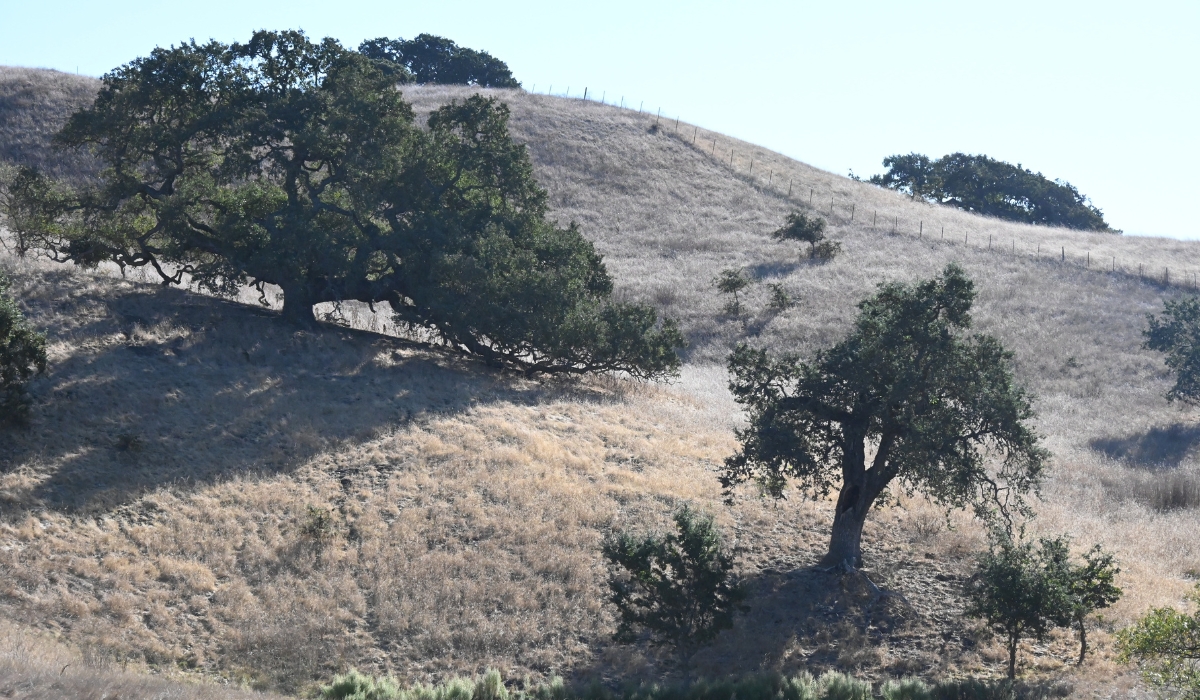
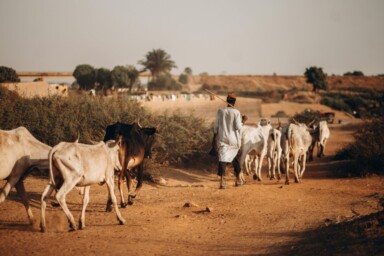
Before European settlers arrived in the 19th century, the San Joaquin Valley used to be a sea of grass, grazed not by bison, but Pronghorns and Tule elks. The native grasses were well adapted, and in winter, cold season grasses flourished, while in summer, heat tolerant warm season varieties dominated, and some grasses even tolerated highly saline soils on the west side of the valley. Could these grasses be reintroduced and could ranching make a comeback?

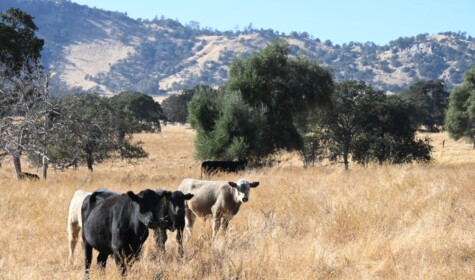
Diane Bohna is a fifth-generation rancher. In 2021, she rented 7,600 acres of land from UC Merced; the land was over grazed, showing more bare patches than remnants of grass. Bohna was an early adopter of Allan Savory’s principles of holistic management, and now, just three years later, 320 cow-calf pairs and a few bulls munch their way through a sea of knee-high grasses. “In the first year, we were lucky and got a wet winter,” says Bohna. There was still a seedbank of native grasses in the soil, and having the cattle graze them right – ‘bunched’ as a tight group and for a short period of time – helped re-establish those grasses. The animals will stay over winter, and during the summer months Bohna and her crew drive them to high altitude pastures in the Sierras on horseback, like the cowboys of old.
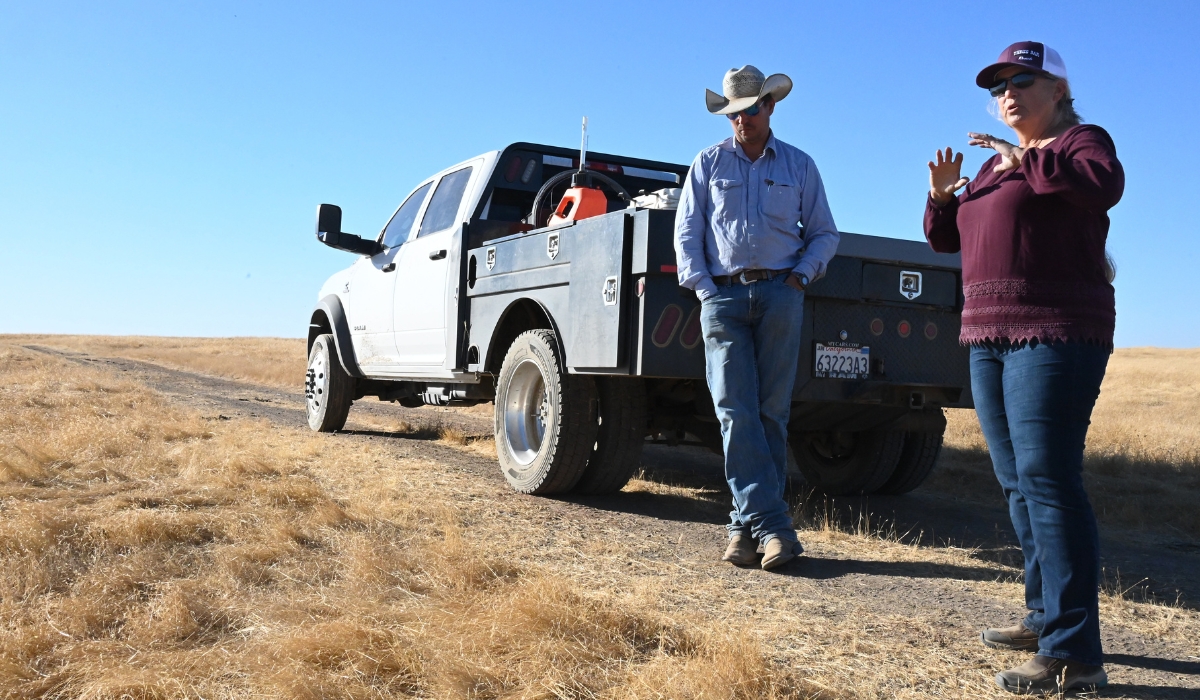
Diana Bohna explains the grazing system
Diane Bohna explains the grazing system


Bringing back native grasses

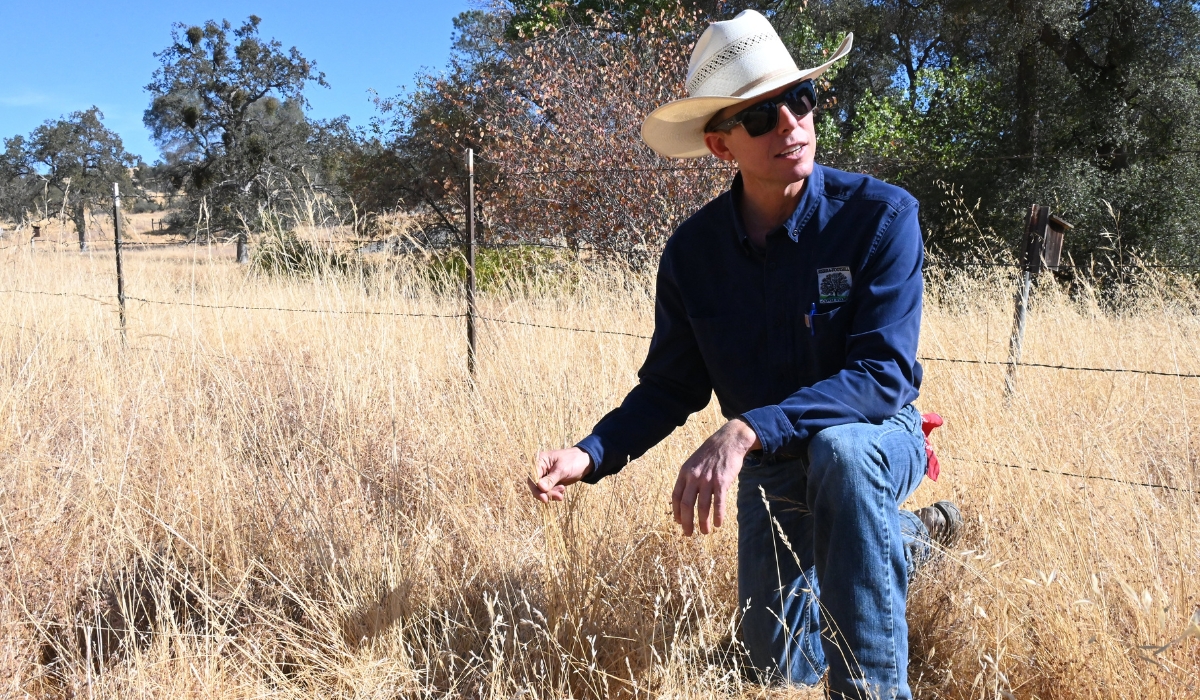
A 45-minute drive to the east of Bohna’s ranchland lies the Sierra Foothill Conservancy (SFC). “Grazing is essential for re-establishing native grasses,” says rangeland manager Billy Freeman. Perennial native grasses have long and deep roots, often going 20-30 feet deep. Most pastures in the valley are re-sown regularly with annual Mediterranean grasses which make for much better feed because of their high sugar content. But their roots grow to just two or three feet and, like other non-native annuals, they are green and palatable earlier and compete heavily with the long rooted native varieties. In order to re-establish native grasses, Freeman has to time very precisely when and for how long the cattle are allowed to graze: non-native species will be rich in sugar and palatable earlier than the native species and therefore will be grazed harder. That leaves them little or no chance to develop seeds and mature. Because the annual grasses are so tasty, native species get grazed lightly which exposes the growth nodes, and once the cattle have been moved these grasses will be able to develop seed heads. Over time, native species recover and soil fertility increases. “We are seeing a lot of changes,” says Freeman. The level of biodiversity and water infiltration has increased. The bank of the creek was eroded, and the cattle rounded off the sharp edge so the vegetation has come back on the bank – there are cottonwoods and willows once again. And the thick layers of dead grass, which prevented fresh growth, have gone, and the grazing has restarted decomposition. Ninety acres of riparian pastures have been re-established next to creeks, by having them grazed once or twice a year for four to six days only.

Billy Freeman
“Grazing is essential for re-establishing native grasses,” says ranchland manager Billy Freeman


“Land needs cattle more than we need meat”

The SFC is a non-profit research facility, but can anyone make a living from ranching? Joe Morris, a cattle rancher in San Juan Bautista, says yes, it’s possible. For him, too, holistic management is key: “Attend to the needs of the whole – livestock, plants and soil microbes,” says Morris, and most of all, observe! He points out the huge variety of cool and warm season grasses on a pasture close to his house. He says, he was extremely surprised when he learnt in a workshop run by ecologist and soil scientist, Christine Jones, that grasses only make up about 10% of the species in grassland – the rest are forbs, broad leaves, shrubs and lots of flowers.

The ranch gets on average just 16 inches of rain, most of it from October to April. The grasses start to dry up by April, and even though it hadn’t rained in six months, there were vernal pools with rushes and, nearby, patches of wet soil underneath green salt grasses.

Ranchland on the San Andreas Fault
The ranchland on the San Andreas Fault


Unlike Billy Freeman, Morris does not use grazing to establish particular varieties, rather using perennials in general, which were in short supply when he took on the ranch. He has been finishing cattle since the late 90s. He buys animals aged 15-20 months directly from ranchers or at auction and finishes them at 24 to 30 months. This gives him the flexibility he needs for grass management and to react to factors such as weather events. The second enterprise is an Angus and Hereford cow/calf herd. To raise and finish all animals on the ranch wouldn’t be feasible because such a system is complicated and inflexible, and the market does not always reward it, says Morris. Lastly, he grazes cattle for other ranchers.

Morris markets the meat of his animals directly. Customers order ¼ or ½ an animal online, which means they will receive a mix of meats. Between June and November he delivers orders to 60 people at five different pick-up locations on each trip. The schedule is tight, customers have 15 minutes for pick up. The meat isn’t cheap, but Morris has a customer base of around 400 people who are willing to pay not just for high quality meat from grass-fed animals, but also for the land stewardship and ecoservices provided.

For [Joe Morris] holistic management is key: “Attend to the needs of the whole – livestock, plants and soil microbes,” says Morris, and most of all, observe!

More than meat

Ranchers should be paid for the ecosystem services their animals deliver, says Rob Rutherford. Before his retirement, he was a professor in the Animal Science department at Cal Poly in San Luis Obispo. Raising sheep has been a life-long passion, as is playing golf. When his local golf club had to retire nine holes due to lack of water, and thistles took over, Rutherford brought in his sheep. It did not take long until 90% of Italian thistle was gone because “the sheep have changed the biology,” he says. Marketing the meat and playing as much golf as he wants for free suits Rutherford well. But to him, using sheep and cattle as ‘land managers’ is much more than a quirky idea: “We don’t know what ecosystem services are worth,” says Rutherford, “the Reagan Library was protected by grazed areas around the building, which acted as a firebreak and saved the library from burning down in 2019.”

Together with others, he is lobbying Cal Fire (California Department of Forestry and Fire Protection) to change the regulations and officially recognize grazing as a fire-fighting tool. Costs for fire insurance have increased dramatically, so much so that it’s become unaffordable for many homeowners, some properties can’t be insured at all. In view of the recent fires that ravaged parts of Los Angeles, premiums will likely increase further. “If homeowners were to get a rebate if their houses were surrounded by a fire break, they would likely be happy to pay a rancher to bring in animals to maintain it.”

Solar farms need livestock too

For 11 years, Katie Brown, one of Rutherford’s former students, worked on establishing a “sheep ecoservice schedule” for what at the time was the world’s largest solar farm project. Once the panels were erected, the area was seeded with a perennial and annual seed mix, containing grass and forb species that naturally occur in the area such as foothill needle grass, pine blue grass and goldfields. The grasses established so well that the team realised they’d need to move in sheep immediately. Today, the grass under the solar panels is grazed by 3,000 to 6,000 sheep, at about 60 sheep per acre.

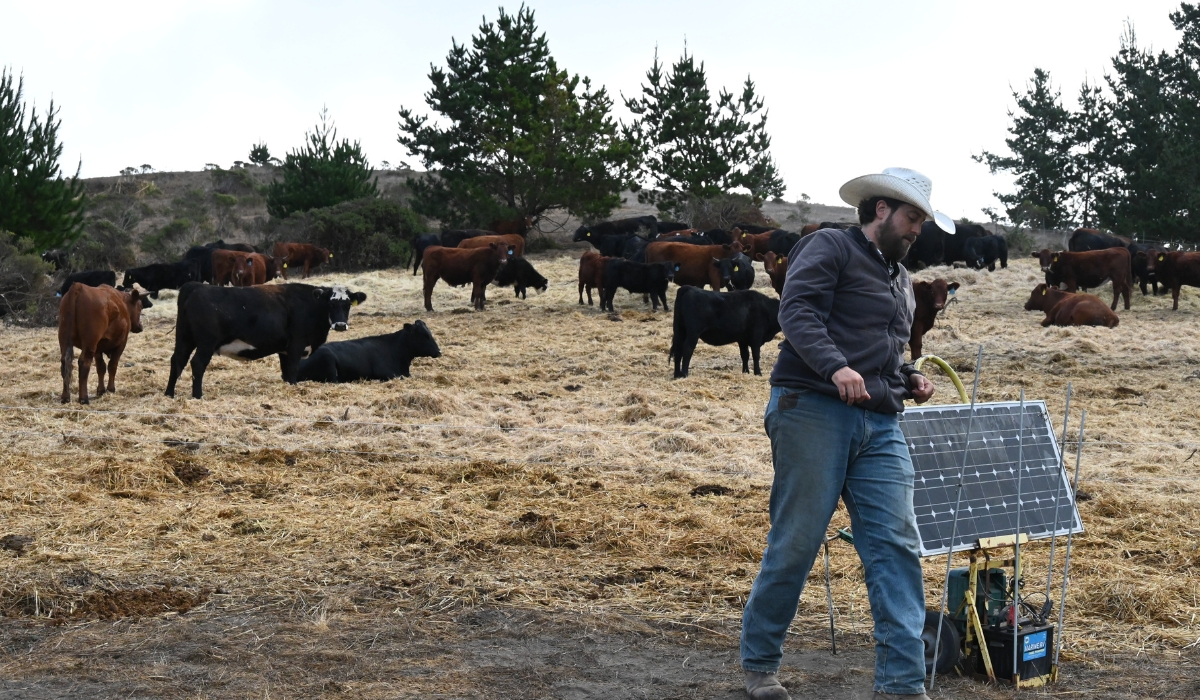
Dakota Glueck, rancher and cattle coordinator at TomKat tends to the cattle
Dakota Glueck, rancher and cattle coordinator at TomKat, tends to the cattle


The panels create a unique microclimate that changes the plant species composition, says Brown. Because they provide shade, evaporation, transpiration and ambient temperature are reduced. That leads to increased biodiversity, and native perennials from dormant seed banks start to flourish and the total biomass production goes up, which means the number of grazing animals can be increased.

Brown believes that ‘solar farm ranching’ or ‘agrivoltaics’ can work financially – ranchers get paid for the grazing services, and their sheep provide wool and meat for local markets. The cost of grazing a solar site is typically cheaper for the solar farm.

As for the San Joaquin Valley, Brown believes that fallowed land there can be restored to a native mix of perennial and annual vegetation. For any such project grazing is essential – sheep can even graze salt grasses – and holistic management is the tool. 

Creating a market

From creating firebreaks to solar farm ranching and golf course management, sheep and cattle can provide a whole host of ecoservices, as well as providing us with food.

Kathy Webster is the Food Advocacy Manager at TomKat Ranch Educational Foundation in Pescadero. She sees her role as a maker of connections. Holistic management benefits the environment, increasing biodiversity and soil health. But ranching is also a business and needs to be profitable. One way to achieve this is to encourage more people to eat grass-fed beef.

For Webster, getting beef into schools, universities and hospitals is key. In 2018, TomKat Ranch started the ‘Beef2Institution’ initiative and hosted ranchers like Joe Morris as well as university, hospital and school food procurement managers to discuss how to get meat from local, grass-fed animals into institutions. Most institutional kitchens source everything from companies such as US Foods or Sysco. And some schools can’t buy raw meat because they either don’t have access to a full kitchen or are not set up to receive raw beef product. The ‘Beef2Institution’ initiative was able to create cooked products, like cooked beef crumble and patties, which schools can use.

Webster also began working with Santana Diaz, a trained chef and Director of Culinary Operations & Innovation at UC Davis Medical Center. Their goal is to get more local, grass-fed beef into all UC campuses and five affiliated hospitals, and Diaz has been coming up with ideas for meals that are tasty but use cheaper cuts of meat.

A unique sales pitch

Sound data on the nutritional value of grass-fed beef, and research done on the benefits of holistic grazing for soil quality and biodiversity, have helped Webster to come up with unique arguments about why buying grass-fed beef from ranchers at a fair price through public procurement ticks all the boxes. Hospitals and other institutions have sustainability and climate goals. Webster does not focus on the low emissions of locally produced, grass-fed meat nor does she attempt to compete on price. Her argument is: buy grass-fed meat for a fair price as a means to reach the sustainability goals of your organization or institution. With the research done at TomKat Ranch, she has the data to show that beef produced in a holistic grazing system increases biodiversity and soil health, helps to mitigate drought conditions and flooding, creates wildlife habitat and, as a healthy, nutrient dense food, actually gives chefs and the people they cater for a lot of bang for their buck.


Photos courtesy of M. Kunz.

Graphic separator Graphic separator