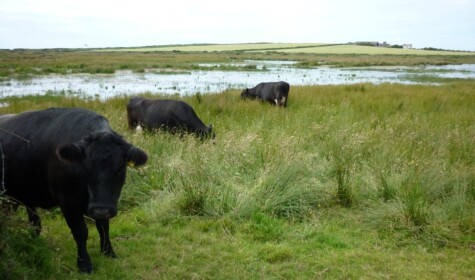
The UK’s rivers and wetlands are under pressure from pollution, droughts and floods, with livestock farming both part of the problem and the solution. In this article, Robert Barbour, Senior Research Manager at the SFT, explores how agroecological livestock systems could help restore water quality and build resilience to climate extremes.
For all that the UK is famed for its reliably damp climate and lush green landscapes, the reality is that it faces a major water problem. This year, an exceptionally dry spring and summer is likely to result in the fifth worst harvest since 1984. Yet it was only last autumn that the south of the country witnessed record-breaking heavy rain that led to the third worst harvest on record. It’s been a bewildering, historic year of weather, but these are far from isolated aberrations. The climate crisis has already increased the likelihood of extreme weather events, and as the planet warms, these are only going to become more frequent and intense, both in the UK and globally.
At the same time, many of our rivers, lakes and wetlands are in a desperate state, choked by sewage and agricultural pollution. While some chemical indicators of water quality have, in fairness, improved over recent years, by most measures our freshwater environment continues to deteriorate – a damning indictment of decades of political and market failure.
These are serious issues, that pose some major challenges for the future of livestock farming in the UK. Intensive production systems, with their often-heavy use of fertiliser and high concentrations of animals – and therefore slurry – are a leading source of nitrogen and phosphate pollution in many catchments, the Wye and Lough Neagh being perhaps the two most infamous examples. Livestock farming is also hugely vulnerable to changes in climate, and the greater extremes in precipitation we are already seeing, pose a real threat to the way in which many farms operate. This is something the sector hasn’t fully come to terms with yet, but if the predictions are right, a much more unstable climate is a reality every farm is going to have to face up to.
How we confront these challenges is, like all things livestock, a contentious issue. Some would argue that livestock have no role to play at all in a food system that works for water. But while every farm and catchment is different, and no one solution will work everywhere, livestock can play a hugely positive role in restoring our aquatic environments and increasing our resilience to extreme wet and dry weather, by helping enable a nationwide transition towards a food system based on agroecological principles.
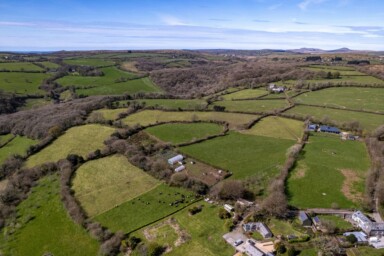
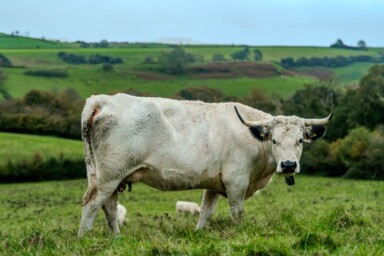
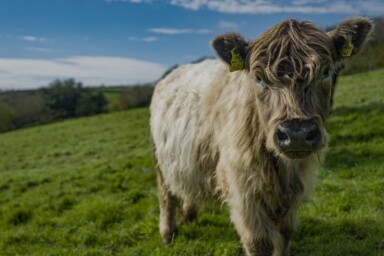
Realising this will require a shift from the largely production-focused systems which remain commonplace today, to a more multifunctional approach, where animals are rotationally grazed on diverse pastures for most or all of the year, with minimal use of synthetic fertilisers, pesticides or arable feed inputs. Such a transition would help alleviate the massive pollution problems associated with intensive livestock systems touched on above. It could also deliver more direct benefits for freshwater biodiversity, by supporting the sorts of low-intensity grazing practices which benefit a number of wetland plant species. Grazing livestock can even help reduce water pollution from conventional all-arable systems, through the re-integration of fertility-building grass and legume ‘leys’, grazed by livestock, into crop rotations. By naturally fixing nitrogen, increasing soil carbon levels and disrupting pest, weed and disease cycles, leys minimise the need for fossil fuel-intensive synthetic fertilisers and pesticides, both of which are major water pollutants in the east of the country.
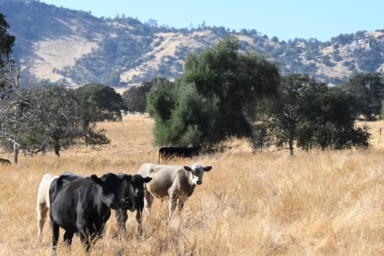
These more nature-friendly, agroecological approaches to livestock production could also improve the resilience of our farming systems to drought and heavy rain, in various ways. Shifting from all-arable to ley-arable systems could, for example, help increase the genetic, landscape and enterprise diversity of farms, so spreading weather-related risks. Agroforestry expansion, meanwhile, would provide more shade and shelter for crops and livestock. But perhaps the biggest climate adaptation benefit of an agroecological approach to food production is that it tends to increase a farm’s soil water holding capacity, thanks, in particular, to the higher levels of soil organic matter generally found in biologically based systems.
This is something which grasslands are key to delivering. Stable organic matter can absorb several times its own weight in water, just one of the reasons why increasing soil organic matter levels is a crucial objective. Grassland soils contain much higher levels of organic matter than arable soils, and this means they soak up water much more effectively than arable land, reducing the speed of runoff and the risk of rivers bursting their banks. This is particularly true with semi-natural and extensively managed grasslands, which are far more effective at reducing the risk of flash flooding than those which are too heavily grazed. Culm grasslands in North Devon, for example, hold more than four times as much water as intensive grassland, and have much slower rates of water runoff, even when the soil is already waterlogged. But there is also considerable scope to improve water holding capacity of improved grasslands too, by encouraging more species-diverse, deep-rooting swards. The integration of trees into grassland can also dramatically improve water infiltration rates in pastures, significantly slowing the flow of water and helping reduce peak river flows during heavy rain, as the Pontbren Project in Wales has shown.
Grasslands can play an even more direct role in flood prevention, in the form of floodplain meadows. Clifton Ings and Rawcliffe Meadows, for example, are a crucial part of York’s flood defences, with their combined water-storage capacity of approximately 2.3 million cubic metres helping reduce the level of floods by up to 15 cm. The capacity of grasslands to store huge quantities of water can bring major benefits during periods of drought, too – including, again, in arable rotations that incorporate temporary leys.
Realising this sort of approach to livestock production at a national scale will obviously be difficult to achieve, requiring major changes in farming practice, and a shift to diets more closely aligned to what the land can sustainably support.
There are reasons for hope, though. The sorry state of our freshwater environment is now a headline issue that has energised a large swathe of society, and this has helped force government into action. There have, for instance, been some promising announcements around policy and regulation, two intensive poultry units have recently had their planning permission removed, and the massive problem of nitrogen pollution is now finally beginning to receive the attention it deserves, in no small part thanks to the work of the Sustainable Nitrogen Alliance (of which the SFT is a member) and others. However, this is only a start, and governments – and indeed every actor in the food system – need to go much further in helping farmers produce food in a way that delivers plentiful clean water.
You can read more about grazing livestock and their role in a sustainable food system in our report, Grazing Livestock: It’s not the cow but the how.
Featured image taken at Treehill Farm by Cath Shellswell.