What’s in your food and how can you eat better? In this series, we look at some staple meals, considering what’s good for you and what’s maybe not – and how you can turn them into dishes that are healthier, better for the planet and alive with flavour.
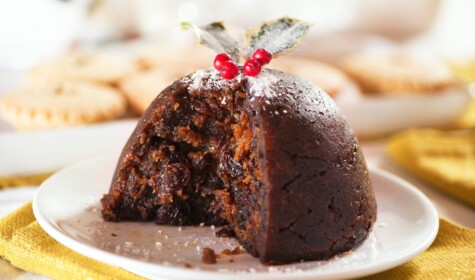
Christmas Pudding is an enduring favourite for dessert at the end of the Christmas meal. But what it is today, is a long way from where it began, somewhere around the 14th century. For starters, it included varied meats along with grains and it was cooked in a thickened broth called ‘frumenty’ which could include a range of ingredients, both savoury and sweet along with wine and spirits. It was traditionally aligned with reference to Christ and the twelve apostles, with thirteen ingredients in the recipe.
Through its history, it has evolved into a tastier and sweeter version, much thanks to the Victorians. The Nineteenth century cook Eliza Acton is credited with developing the first proper recipe for Christmas Pudding, appearing in her cookbook Modern Cookery for Private Families. Making your own Christmas Pudding isn’t as difficult as you might think, and it’s well worth having a go at it, because the ones bought in the supermarket are likely to have a number of not-so-good ingredients – almost all of the supermarket Christmas Puddings have palm oil and vegetable glycerol, along with emulsifiers such as E471 and E472e. And though organic versions are much better, you’d be surprised by what can slip in. In fact, many shop-bought puddings fall into the realm of ultra-processed food (UPF) – a category describing foods that are branded, commercial formulations made from cheap ingredients combined with additives, and mostly containing little to no whole foods. A recent study published in The Lancet reports that increased consumption of UPFs is driving multiple diet-related chronic diseases on a global scale.
There are myriad variant recipes for Christmas Pudding, but traditionally it started with mixed dried fruits and nuts playing an important role. Both are high in fibre and polyphenols, and they can sweeten food without the added sugar. They are also rich in antioxidants, and further, the spices in Christmas Pudding have both anti-inflammatory and anti-bacterial properties, so you can feel good about your dessert! Suet is used in most Christmas Puddings to meld the mixture together and it’s generally easy to get from a good butcher. For vegetarians it’s a little trickier as vegetable suet can contain highly processed ingredients – but opting for organic and avoiding formulations that contain hydrogenated vegetable oil can help to steer you towards healthier, more sustainable variants.
Recipes
Here are three home recipes to try this Christmas, each offering a slightly different take – from a tried-and-tested classic to a pudding that makes the most of in-season fruit.
- This Christmas pudding recipe from BBC Good Food takes a classic approach
- This steamed pudding uses quince as the fruit – currently in-season in the UK
- This recipe from Doves Farm is a nice alternative to the traditional Christmas favourite
To read the other articles in our ‘Making More of Your Meal’ series, click here.